Flat Roofing: What Property Owners Should Know

A flat roof usually starts getting attention when water appears on a ceiling, felt starts lifting at the edges, or age catches up with the covering all at once. Flat roofing can be a very practical choice for garages, extensions, dormers, porches and commercial units, but it needs to be installed properly and maintained sensibly. If the build-up is wrong, the falls are poor, or repairs are patched over instead of dealt with properly, problems rarely stay small for long.
For homeowners and landlords, the main question is not whether a flat roof is good or bad. It is whether the roof has been designed and fitted to suit the building, the use of the space and the expected lifespan. A well-built flat roof can give many years of reliable service. A badly fitted one can become a repeat expense.
Why flat roofing is still a solid option
Flat roofs remain popular because they are practical, adaptable and often more cost-effective than pitched alternatives on certain parts of a property. They work well on rear extensions where head height matters, on garages where simplicity is an advantage, and on commercial buildings where access for maintenance is needed.
Another reason flat roofs are widely used is that modern materials are much better than older systems people may remember. Many of the horror stories still come from ageing coverings that were fitted years ago, often with minimal insulation and poor drainage. Newer systems, when installed by an experienced contractor, are far more dependable.
That said, flat roofing is less forgiving than many property owners expect. Because the roof has only a slight fall rather than a steep pitch, water must be directed correctly. Small defects in joints, upstands, flashings or outlets can lead to leaks. Good workmanship matters just as much as the material itself.
Common flat roofing materials
There is no single best material for every roof. The right choice depends on budget, expected lifespan, how much foot traffic the roof will get, and the condition of the structure beneath.
Felt flat roofing
Traditional felt is still used widely and, when fitted correctly in layers with modern torch-on systems, it can provide a reliable waterproof covering. It is often chosen because it is cost-effective and suitable for many domestic roofs.
The trade-off is that felt can be more vulnerable to ageing, splits and edge wear over time than some premium systems. It can still be the right choice, especially for garages and smaller extensions, but it needs proper installation and decent detailing around corners and outlets.
GRP fibreglass roofing
GRP, often called fibreglass roofing, gives a tough and seamless finish. It is popular on extensions and smaller residential roofs because it looks neat and can be very durable. It also copes well where a clean appearance matters.
However, GRP needs dry conditions during installation and careful preparation of the deck. If the roof shape is awkward or the weather is poor at the time of fitting, that can affect the result. It is a strong option, but not one to rush.
EPDM rubber roofing
EPDM is a synthetic rubber membrane known for flexibility and long life. It works well on larger flat roofs and can handle temperature changes better than some older materials. Because it comes in large sheets, it can reduce the number of joints.
Its performance depends heavily on the detailing. A large sheet is helpful, but edges, trims and penetrations still need to be finished properly. It is not just a case of rolling it out and hoping for the best.
What usually goes wrong with flat roofs
Most flat roof failures are not caused by the idea of a flat roof itself. They come from poor falls, bad workmanship, ageing materials, trapped moisture or neglect.
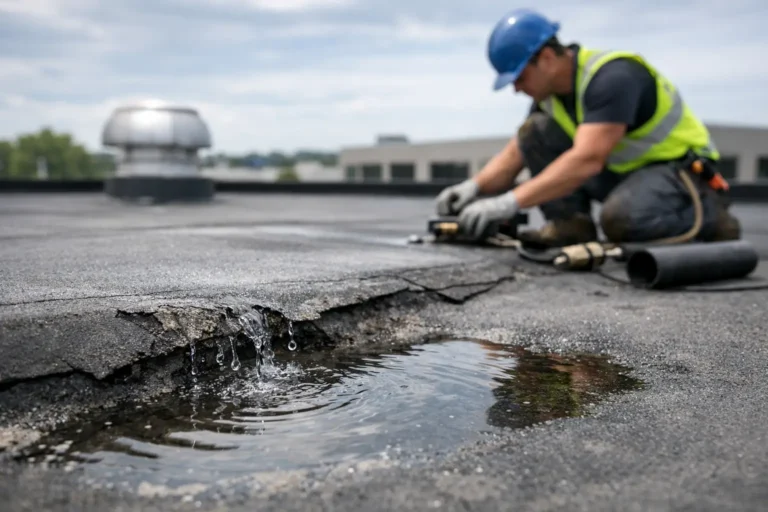
Standing water is one of the biggest warning signs. A flat roof should not be completely level. It needs enough fall to move water towards the outlet. If water sits for too long, it increases wear on the covering and exposes weak points more quickly.
Another common issue is failed flashing. The waterproof layer may still be serviceable across the main surface, but if the upstand against a wall or skylight has broken down, water can track behind it and appear elsewhere inside the building. That is why leak tracing is not always straightforward. The visible damp patch indoors may not sit directly below the external defect.
Blisters, cracks, lifted seams and soft spots underfoot are also signs that a roof needs professional attention. In some cases, a local repair is enough. In others, patching one weak area only delays the cost of replacement.
Repair or replace?
This is where honest advice matters. Not every leaking flat roof needs replacing, but not every old roof is worth repairing either.
If the problem is localised, the substrate is still sound and the rest of the roof is in fair condition, a repair can make good sense. A split seam, a small puncture or a failed edge detail can often be dealt with without full replacement. That approach is usually quicker and more affordable.
If the roof is nearing the end of its life, has multiple previous repairs, or the decking and insulation beneath have been affected by moisture, replacement is often the better long-term decision. Spending money repeatedly on short-term patch repairs can cost more in the end. The best contractors will tell you plainly which situation you are dealing with.
What to check before flat roofing work starts
If you are getting quotes for flat roofing, it helps to know what should be discussed before any work begins. The contractor should look at the roof structure, the existing covering, drainage points, edge details, adjoining walls and any signs of internal damp or timber damage. A proper inspection is the difference between solving the issue and covering it up.
You should also know what system is being proposed and why. A straightforward garage roof may suit one material, while a lived-in extension beneath may benefit from another. Insulation requirements may also come into play, especially if the roof covers heated internal space.
Site access matters too. On some properties in Ashford, Staines and surrounding areas, side access is tight, parking is limited or the roof is above a conservatory or garden structure. These practical points affect labour, safety and how materials are moved in and waste is taken away.
A good contractor should explain the scope clearly, confirm whether old materials are being stripped or overlaid, and leave no confusion about waste removal and clean-up. That practical side of the job matters just as much as the finished roof.
Why workmanship matters more than sales talk
Flat roofs are sometimes sold on product alone, but the material is only part of the job. Even a good membrane can fail early if the deck is uneven, the joints are weak or the perimeter details are rushed.
Experienced roofers know where flat roofs typically fail first. It is often around edges, outlets, pipes, rooflights and wall abutments. These are the areas that need care, not shortcuts. A roof can look tidy from the ground and still be vulnerable if the detailing is poor.
This is also why local experience counts. A contractor used to working across Surrey and Middlesex will understand the common property types in the area, from ageing garages and bay tops to extension roofs and small mixed-use commercial buildings. AJW Specialists Property Maintenance takes that practical approach – inspect properly, explain the options clearly, carry out the work safely and leave the site clean.
Looking after a flat roof once it is installed
A flat roof does not need constant attention, but it should not be ignored for years at a time. Basic maintenance helps avoid more expensive repairs.
Keep outlets and gutters clear, especially after autumn leaf fall and heavy winds. If water cannot escape, even a sound roof will be put under unnecessary strain. It is also worth checking after storms for lifted edges, impact damage or debris build-up.
If you notice staining indoors, a musty smell near the ceiling, or changes to the roof surface outside, get it checked early. Fast action is usually cheaper than waiting. The same applies if you own rental property. Small roof defects can quickly turn into damaged plaster, insulation issues and tenant complaints.
For any property owner, the sensible approach is simple. Treat flat roofing as a building system, not just a top layer. When the structure, drainage, covering and workmanship are all right, it can be a reliable and cost-effective solution for many years. If you are planning work or dealing with a leak now, the best next step is to get the roof assessed properly and deal with the real cause before it spreads.