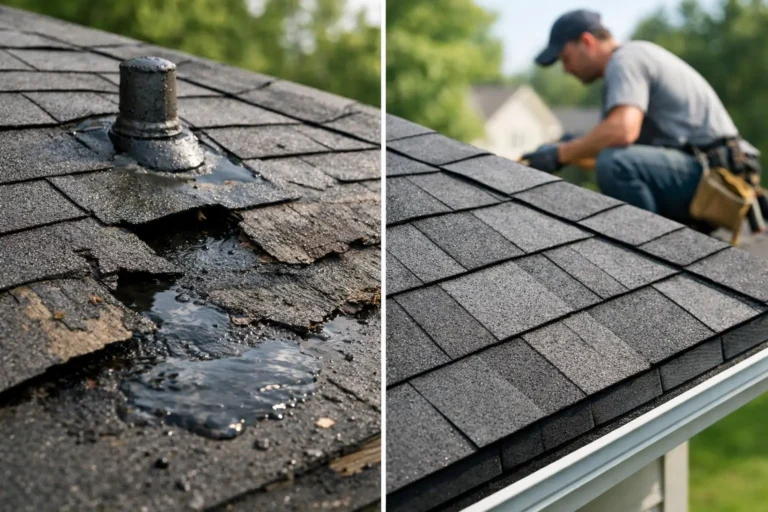
Guide to Roof Flashing Repairs

A small leak around a chimney or skylight rarely starts as a major roofing job. More often, it comes down to flashing that has lifted, cracked, rusted or simply worn out over time. This guide to roof flashing repairs is here to help you understand what flashing does, how it fails, and when a repair is sensible versus when replacement is the better call.
Flashing is one of those parts of a roof most property owners never think about until water starts getting in. It sits at the vulnerable joins – around chimneys, roof valleys, abutment walls, vents and roof windows – and its job is simple. It keeps water moving away from openings and junctions where leaks are most likely to happen. When flashing goes wrong, even a sound roof can start letting in water.
What roof flashing actually does
Roof coverings are designed to shed rain down the slope. The problem comes where the roof surface is interrupted or meets another structure. A chimney stack, a parapet wall, a soil vent pipe or a Velux window all create points where water can collect or push sideways under tiles or felt. Flashing acts as the weatherproof barrier at those joints.
On pitched roofs, lead flashing is common because it is durable, flexible and long-lasting when fitted properly. On other roofs, especially some modern systems and flat roofing details, flashing may be formed from zinc, aluminium, steel or specialist waterproof membranes. The right material depends on the roof type, the detail being sealed, and the age of the building.
The key thing for homeowners and landlords is this – flashing is not decorative trim. It is a working part of the roof system. If it starts failing, the leak can travel behind plaster, into loft insulation, down cavity walls or around timber supports before it becomes obvious indoors.
Guide to roof flashing repairs – the warning signs
Not every leak points straight to flashing, but there are patterns that often suggest it. Damp patches on ceilings near a chimney breast are a common one. Water marks around a roof window or staining on an upstairs wall where the roof meets brickwork can also indicate flashing trouble.
Outside, you may spot lead lifting away from the wall, split joints, missing mortar around stepped flashing, corrosion on metal flashings, or old sealant that has cracked and shrunk. On flat roofs, the flashing detail at the edge or upstand may have pulled away, blistered or separated at the joint.
Sometimes the roof leak only appears during wind-driven rain. That usually means water is getting in sideways at a junction rather than straight through the middle of the roof covering. Flashing defects are a common cause of that sort of intermittent problem.
If you can safely view the roof from ground level, look for obvious movement, gaps or staining. If you cannot, do not climb up for a closer look unless you have the proper access and experience. A quick inspection done badly often turns one problem into two.
Why flashing repairs fail when they are rushed
A lot of poor roof repair work starts with the idea that any leak can be sorted with a bead of sealant. In reality, surface patching is only reliable in limited situations. If flashing has split because of age, if it has come loose from the wall, or if the surrounding mortar and roof covering are also failing, mastic alone is unlikely to last.
That does not mean temporary repairs have no place. In an emergency, a fast, weatherproof stop-gap can protect the property until a proper repair is carried out. But temporary and permanent are not the same thing, and it is better to be clear about that from the start.
Good flashing repair work depends on finding the true entry point of the water, checking the surrounding roof detail, and using compatible materials. If one section is repaired while nearby lead soakers, valley details or tile edges are already failing, the leak may come back in the next spell of bad weather.
Common types of roof flashing repair
The right repair depends on what has actually failed. Loose stepped flashing at a wall may need to be carefully re-dressed and re-fixed, with damaged mortar joints raked out and pointed properly. Cracked lead around a chimney may be repaired in a limited section if the rest remains sound, but widespread fatigue usually points to replacement.
Where flashing has slipped because fixings have failed, it may be possible to secure it again and restore the weatherproof detail. If corrosion has eaten through metal flashing, patch repairs are sometimes too short-lived to justify the labour, and fitting new flashing is the better value option.
On flat roofs, flashing repairs often involve re-forming the upstand detail, heat-welding or bonding compatible membranes, and checking the edge trims and outlets nearby. This is not one area where guesswork pays off. Poorly matched products can fail much faster than expected.
For roof windows and skylights, the problem is not always the window itself. The flashing kit around it may have been fitted badly, damaged over time, or affected by movement in the surrounding tiles. If the unit is otherwise in good condition, repairing or replacing the flashing detail can stop the leak without replacing the whole window.
Repair or replace – how to decide
This is where a proper site inspection matters. A localised defect on relatively modern flashing can often be repaired cost-effectively. That is especially true where storm movement, minor impact damage or isolated mortar failure has caused the issue.
If the flashing is old across the whole roof area, has multiple splits, or has already been patched several times, replacement is usually the smarter option. Repeated call-outs cost money, and recurring leaks can damage ceilings, insulation, timber and internal decoration. What looks like the cheaper job on day one can turn into the expensive route over a year or two.
Property age also matters. Older homes in Surrey and Middlesex often have traditional leadwork details that need an experienced hand. Cutting corners on heritage-style roof junctions can create bigger problems, especially around chimneys and abutment walls where movement and weather exposure are ongoing.
What affects the cost of flashing repairs
There is no single fixed price because access, material and extent of damage all come into it. A simple repair at a low-level roof junction is very different from replacing chimney flashing on a steep roof that needs scaffold access.
The material matters too. Lead remains a strong choice for many repairs, but the size of the section, the code of lead needed and the complexity of the detail all affect cost. Flat roof flashing repairs can vary depending on whether the existing system is felt, GRP or rubber, and whether the surrounding area also needs remedial work.
The best approach is to look at value rather than just the cheapest figure. A proper repair should deal with the source of the leak, use suitable materials and leave the area tidy and secure. That saves repeat visits and further water damage.
When to call a roofer straight away
If water is actively coming in, if the leak is close to electrics, or if flashing has been lifted by wind, treat it as urgent. The same applies if you can see loose sections near a chimney or roof edge. Water ingress can spread quickly, and strong winds can turn a minor defect into missing materials or falling debris.
Landlords and small commercial property occupiers should act quickly as well. Delays can affect tenants, stock, ceilings and insurance claims. Fast response matters, but so does making sure the repair is carried out properly rather than patched and forgotten.
For local property owners, using a team that understands roofing as part of wider exterior maintenance can make things simpler. If flashing failure has also damaged brickwork, soffits, plaster or debris needs clearing from site, it helps to have one insured contractor handle the lot without passing you from trade to trade.
Preventing the next flashing problem
Roof flashing does not usually fail without warning. Regular visual checks after heavy wind and rain can spot movement early. Keeping gutters clear also helps, because overflowing water can soak roof junctions and make a small weakness show up sooner.
If you are already booking roof work for slipped tiles, chimney repointing or a flat roof repair, it makes sense to have the flashing checked at the same time. Preventative work is usually far less disruptive than dealing with internal water damage later.
AJW Specialists Property Maintenance sees this regularly across Ashford, Staines and surrounding areas – a small flashing defect left too long becomes a larger repair because the water has had time to spread. Getting it inspected early is usually the practical move.
A sound roof is not just about tiles or felt. The details matter, and flashing is one of the most important of them. If you have signs of a leak around a chimney, wall junction, vent or roof window, do not wait for the next downpour to confirm it. A timely repair is often the difference between a straightforward fix and a much bigger job.