Roof Patching Versus Replacement: Which Is Best?
A roof leak rarely arrives at a convenient time. It may show up as a brown mark on a bedroom ceiling after heavy rain, a drip around a chimney breast, or water pooling on a flat roof. The immediate question is usually whether to patch the problem or replace the roof altogether. Roof patching versus replacement is not simply a choice between the cheapest and most expensive option. It comes down to the roof’s overall condition, the cause of the fault and whether a repair will genuinely protect the property.
A proper assessment can save money in both directions. Replacing a roof that only needs a local repair is unnecessary. Repeatedly patching an ageing roof with several weak areas can cost more over time and leave the building exposed to further water damage.
When a roof patch is the right job
A patch repair is often the sensible option when the roof is generally sound and the problem is isolated. Storm damage, a slipped tile, cracked flashing, a damaged ridge tile or a small split in a flat-roof covering can all allow water in without meaning the entire roof has failed.
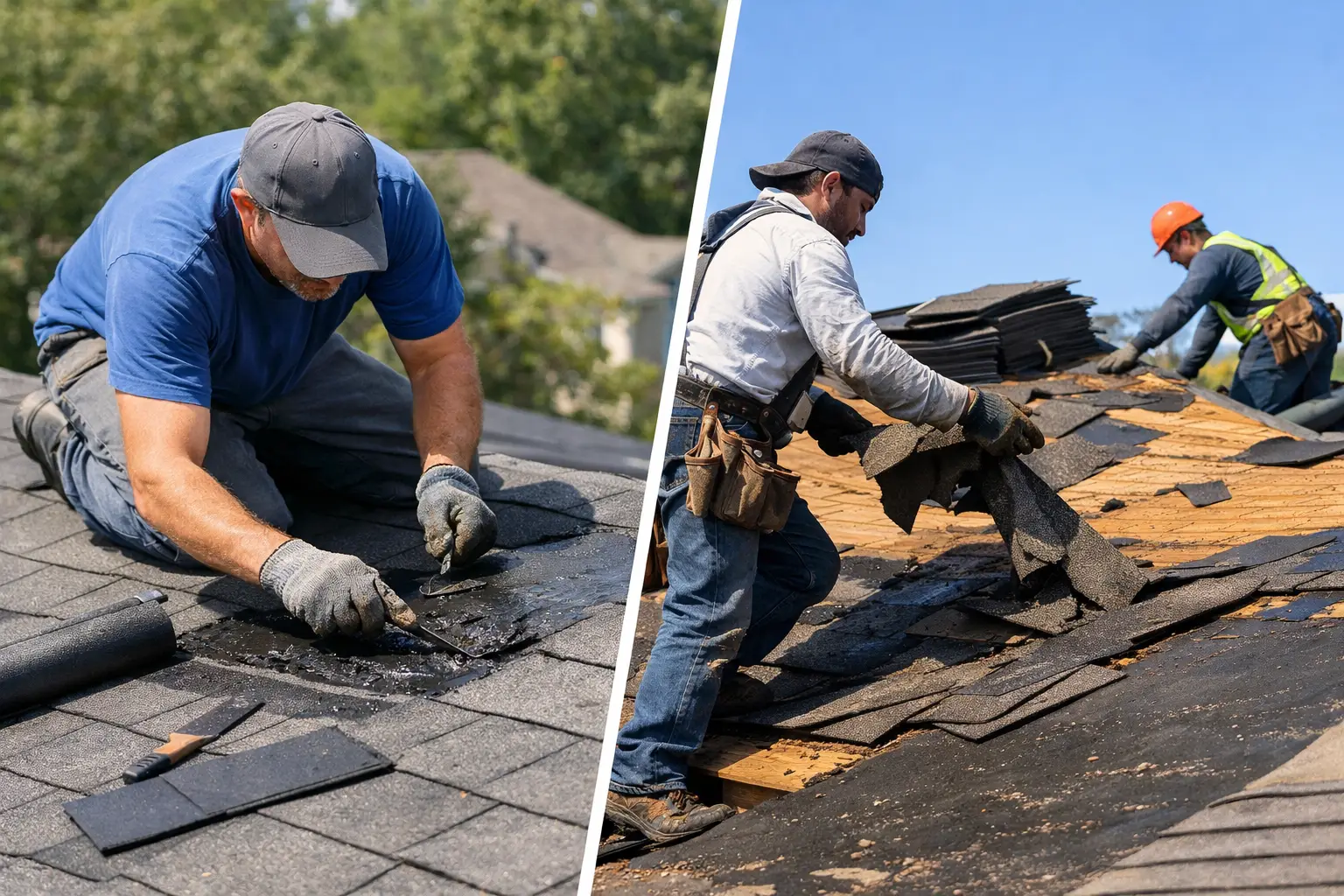
For pitched roofs, repairs may involve replacing broken or missing tiles, securing loose slates, renewing leadwork around a chimney, repairing valleys, or repointing damaged ridge tiles. On a flat roof, a local repair might deal with a small puncture, an open seam, failed flashing detail or a crack around an outlet.
The key point is that the surrounding roof covering must still have useful life left. A sound patch needs a sound surface around it. If the adjacent felt is brittle, the tiles are badly weathered or the underlying structure has started to deteriorate, a neat-looking repair may only hold back the next leak for a short period.
Patching is particularly worthwhile where the damage has a clear, one-off cause. For example, a branch may have damaged a small section of felt, or high winds may have lifted a handful of tiles. Once the affected area has been repaired properly and the roof checked for related damage, there may be no reason to disturb the rest of the roof.
When replacement makes better financial sense
A new roof is a bigger decision, but it is often the more responsible one when faults are widespread. Multiple leaks, recurring repairs in different areas, sagging roof lines and badly worn materials are warnings that the roof is no longer performing as a complete system.
Replacement may also be the right answer if water has reached the roof structure. Rotten battens, damaged rafters, wet insulation and crumbling decking cannot be resolved by replacing tiles or applying sealant on the surface. The source of the water must be dealt with, then the underlying materials need to be inspected and repaired as required.
Age matters, but it should not be the only deciding factor. A well-installed tiled roof can last for decades, while a flat roof’s lifespan varies widely depending on its material, installation quality, drainage and maintenance. A roof nearing the end of its expected life is not automatically beyond repair, but recurring problems should be viewed realistically.
Replacement can also provide the chance to correct issues that have been present for years, such as poor drainage, inadequate falls on a flat roof, tired flashing, insufficient ventilation or unsuitable materials from a previous repair. It is easier and more cost-effective to address these details while the roof is opened up than to keep treating the symptoms later.
Roof patching versus replacement: what an inspection should reveal
No contractor should recommend major work based solely on a quick look from ground level. A useful roof inspection checks the visible covering as well as the areas where water commonly enters: valleys, chimneys, flashings, ridges, verges, gutters, rooflights and pipe penetrations.
Inside the property, signs in the loft can be just as revealing. Damp timbers, water staining, mould, wet insulation and daylight visible through the roof covering all help identify the extent of the problem. A leak is not always directly above the damp patch on the ceiling, as water can travel along rafters or felt before it becomes visible indoors.
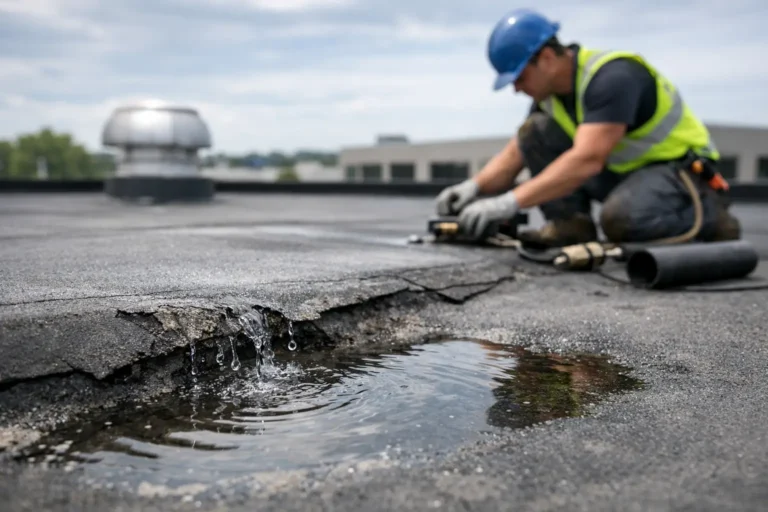
On a flat roof, standing water deserves attention. Some materials can tolerate small amounts of temporary ponding, but regular pooling can speed up deterioration and point to inadequate drainage or a surface that has lost its proper fall. Blisters, cracking, exposed reinforcement and lifting edges should also be assessed before deciding whether a local patch is enough.
These are common signs that replacement should at least be considered:
- Leaks keep returning after previous repairs.
- Damage appears across several sections of the roof.
- Tiles, slates or felt are consistently breaking down due to age.
- The roof deck, battens or rafters show signs of rot or movement.
- A flat roof has widespread cracks, failed joints or persistent standing water.
One issue alone does not always mean a full replacement is required. A good contractor will explain what has failed, what can be repaired, what may need monitoring and why a particular recommendation is being made.
The hidden cost of repeated small repairs
A small roof repair can be excellent value when it stops a local fault early. The problem comes when repairs become routine. Paying for call-outs, access equipment, labour and materials every few months soon adds up, particularly if water continues to damage ceilings, plasterwork, insulation or electrics inside the property.
There is also the disruption to consider. Landlords may face complaints from tenants, homeowners may need rooms redecorated more than once, and small business premises can lose working space when a leak worsens. In those circumstances, replacement is not just about the roof covering. It is about reducing ongoing risk and avoiding repeated inconvenience.
That said, replacement is not automatically the cheaper option over the next decade. If a roof is otherwise in good condition and a local repair can be completed correctly, it makes little sense to remove serviceable materials. The best value is work that matches the condition of the roof, rather than work chosen only because it has the lowest upfront figure.
Emergency work first, then the right long-term repair
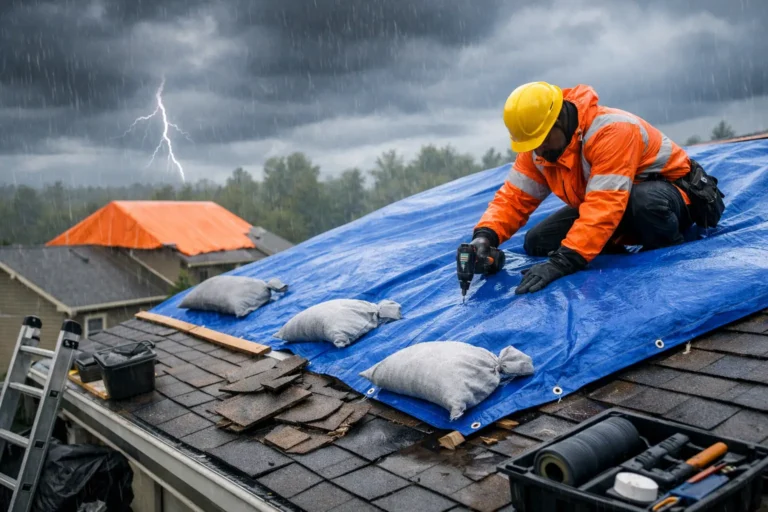
When water is entering during heavy rain, the priority is to make the property safe and limit further damage. Emergency work may include securing loose materials, covering an exposed section, clearing a blocked outlet or carrying out a temporary repair where conditions make a permanent repair unsafe.
A temporary measure should be described honestly. It can protect the property until dry weather, materials or safe access are available, but it is not the same as resolving the underlying issue. Once conditions allow, the roof should be inspected again and a clear repair or replacement plan agreed.
Homeowners should be cautious about climbing onto a wet roof or applying large amounts of sealant without finding the source of the leak. This can be dangerous, and surface sealant often masks the problem while trapping water or redirecting it elsewhere. If a tile is loose or there is a visible small fault accessible from a safe position, photographs can help explain the issue, but professional access and inspection are usually the safer route.
What a clear quote should include
Whether the work is a patch or a replacement, the quote should set out the scope clearly. You should know which materials are being repaired or renewed, whether damaged timber is included if found, how waste will be removed and whether gutters, flashings or adjacent details are part of the work.
For a replacement roof, it is also worth confirming how the property will be protected during the work, what happens if additional hidden damage is uncovered, and how the site will be left once the job is complete. Licensed waste handling matters here. Old felt, broken tiles, timber and insulation should be removed and disposed of properly, not left for the customer to deal with.
AJW Specialists Property Maintenance takes a practical approach: inspect the fault, explain the options plainly and carry out the work needed to protect the property without pushing unnecessary replacement. For homes and premises across Ashford, Staines and surrounding areas, fast action on a small leak can often prevent a far larger job later.
If your roof has started leaking, do not wait for a damp patch to become damaged ceilings, rotten timbers or mould. Arrange an inspection, ask what caused the fault and make the decision based on the roof’s real condition. A well-executed patch can buy years of service, while the right replacement can bring lasting peace of mind.