A Guide to Boundary Fence Regulations
A fence can solve one problem and create another. You put it up for privacy, security or to replace storm damage, then a neighbour asks whether it is on the right line, too high, or even your responsibility at all. That is exactly why a clear guide to boundary fence regulations matters before any posts go in the ground.
For most property owners, the main issue is not the fence itself. It is the risk of paying for the wrong job, falling foul of planning rules, or turning a simple repair into a drawn-out boundary dispute. The good news is that most fence problems can be avoided if you check ownership, height and location first.
What boundary fence regulations usually cover
When people talk about boundary fence regulations, they often mean a mix of legal ownership, planning limits and neighbour rights. These are related, but they are not the same thing.
Boundary ownership is about who is responsible for a particular side of the property. Planning rules deal with what you are allowed to build and how high it can be. Neighbour issues usually come down to whether the fence is on the correct boundary line and whether the work affects access, light or visibility.
That is why there is rarely a one-size-fits-all answer. A straightforward rear garden replacement may be simple. A front boundary fence near a road junction, or a fence shared by two owners who disagree on the line, needs more care.
Who owns the boundary fence?
This is usually the first question, and it catches plenty of people out. Many assume the fence on the left or right is automatically theirs, but that is not always true. The starting point is your title deeds or Land Registry documents, which may show boundary responsibilities. Even then, the markings are not always precise enough to settle every argument.
Some properties have T-marks on plans to show who maintains a boundary. If there is no clear marking, you may need to rely on previous agreements, historic fence positions and practical evidence on site. In reality, many older boundaries are accepted by long use rather than crystal-clear paperwork.
If a fence is wholly on your land, it is generally yours to maintain. If it sits on the boundary and both parties treat it as shared, costs and decisions may need to be agreed together. That is where problems start if one side wants closeboard panels and the other wants to keep the old fence standing.
Height rules in this guide to boundary fence regulations
Fence height is one of the most common issues because it affects privacy, appearance and planning permission. In many cases, you can erect or replace a fence up to 2 metres high without planning permission, provided it is not next to a highway used by vehicles.
If the fence is adjacent to a highway, the usual limit is lower, often 1 metre. That catches out more people than you might think, especially with corner plots, front gardens and side boundaries that run along a road. What feels like a side fence can still be treated as being next to a highway.
There are exceptions and local restrictions. Listed buildings, conservation areas and properties with specific planning conditions may have tighter controls. If a previous owner agreed something through planning, that can also affect what is allowed now.
The key point is simple. Measure before you build, and measure from the right ground level. A few inches over can still be an issue if the fence is in a sensitive position.
Repairs are not always treated the same as new fences
A like-for-like repair is often less complicated than a brand-new installation, but it is risky to assume all replacement work is exempt from scrutiny. If you replace a low fence with a much taller one, move the line, or add solid screening where there was none before, that may be treated differently.
Storm damage is a good example. If panels have come down and need urgent replacement, speed matters. Even so, the safest approach is to match the previous arrangement unless you have checked that a higher or different style fence is acceptable.
For landlords and commercial occupiers, this matters even more. Quick fixes that ignore boundary rules can lead to complaints later, and those complaints can become expensive if the fence has to be altered or removed.
Boundary lines are not always where people think
The legal boundary is often thinner than the physical features around it. A fence, hedge or wall may sit slightly inside one owner’s land, even if everyone assumes it marks the exact line. That difference can be small, but it matters if you are replacing posts, digging concrete in, or trying to reclaim a strip of land.
Never rely on guesswork if there is any existing disagreement. Old fence posts, paving lines, extension walls and neighbouring structures can all help tell the story, but they do not automatically prove ownership. If the line is disputed, it may be worth getting professional advice before works begin.
From a practical contractor’s point of view, this is where experience helps. A good team will spot when a job is a routine replacement and when it has warning signs, such as conflicting instructions from neighbours or obvious signs the old fence was never straight.
What if the neighbour disagrees?
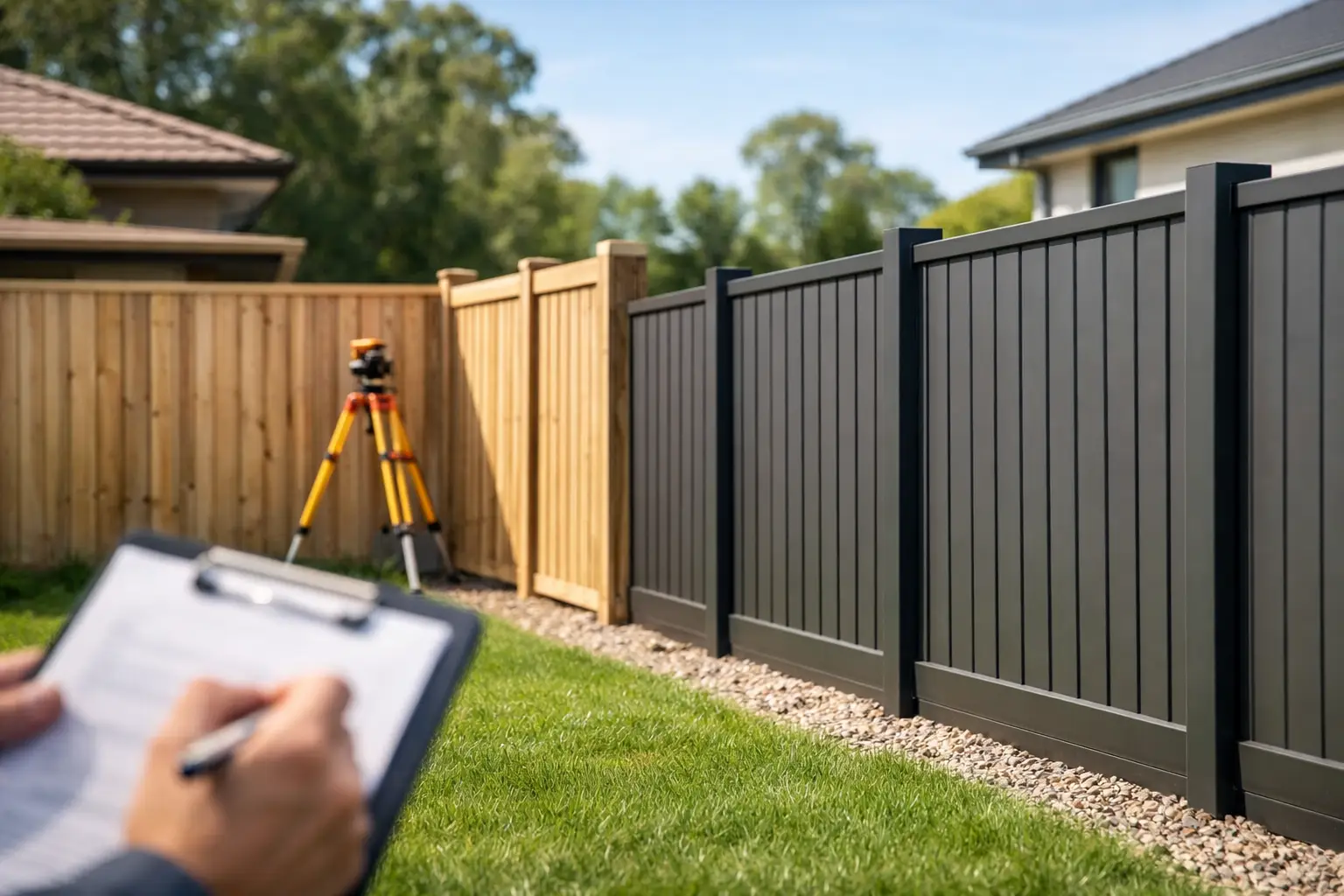
Not every disagreement turns into a formal dispute, but once relations become strained, even basic fencing work can stall. The best first step is a straightforward conversation before materials are ordered. Confirm which boundary is involved, what type of fence is proposed, and whether access is needed from the other side.
If the fence is clearly yours and on your land, you may still want to keep the neighbour informed. It avoids unnecessary arguments and shows you are not trying to move the line by stealth. If the fence appears shared, agreement is more than a courtesy. It is usually the sensible route.
Keep records of what has been discussed, especially if costs are being shared. Verbal agreements are fine until memories differ. A simple written note can save a lot of trouble.
Planning permission and local checks
This guide to boundary fence regulations would not be complete without one practical warning. General rules are useful, but local planning conditions can override assumptions.
If your property is on a modern development, near a listed building, in a conservation area or on a prominent roadside plot, check before work starts. Frontage fencing often attracts more attention than rear garden work. The same applies where visibility for drivers or pedestrians could be affected.
In parts of Surrey and Middlesex, many properties have awkward side returns, shared drives and corner positions. Those layouts make it especially important to think about sight lines and highway-facing boundaries, not just garden privacy.
Choosing the right fence within the rules
The regulations matter, but so does the build itself. A fence that is technically allowed can still be the wrong choice if it will not stand up to the site conditions. Height, wind exposure, soil condition and post depth all matter.
Closeboard fencing is a common choice for privacy and strength, but it creates more visual impact than lighter styles. Trellis can soften the look and reduce the sense of enclosure, though it offers less screening. Concrete posts and gravel boards can improve lifespan, but some homeowners prefer timber for appearance.
There is always a balance between privacy, cost, maintenance and neighbour impact. The right answer depends on the property, not just the catalogue picture.
When to get help before the work starts
If the boundary is clear and the fence is a standard height in a rear garden, the job may be straightforward. But if any of the following apply, it is worth slowing down first: unclear ownership, shared costs, highway-facing boundaries, unusual height, planning restrictions or a neighbour already objecting.
That is where dealing with an experienced local contractor makes a difference. A practical team will not just install panels. They will look at the line, flag up obvious risks, and carry out the work properly so you are not paying twice. For property owners who want the job handled cleanly and with less hassle, that matters as much as the fence itself.
A good fence should make life easier, not more complicated. If you check the boundary, the height and the local rules before work begins, you give yourself a far better chance of getting a result that is secure, tidy and free from avoidable arguments.