
Closeboard Fencing Installation Done Properly
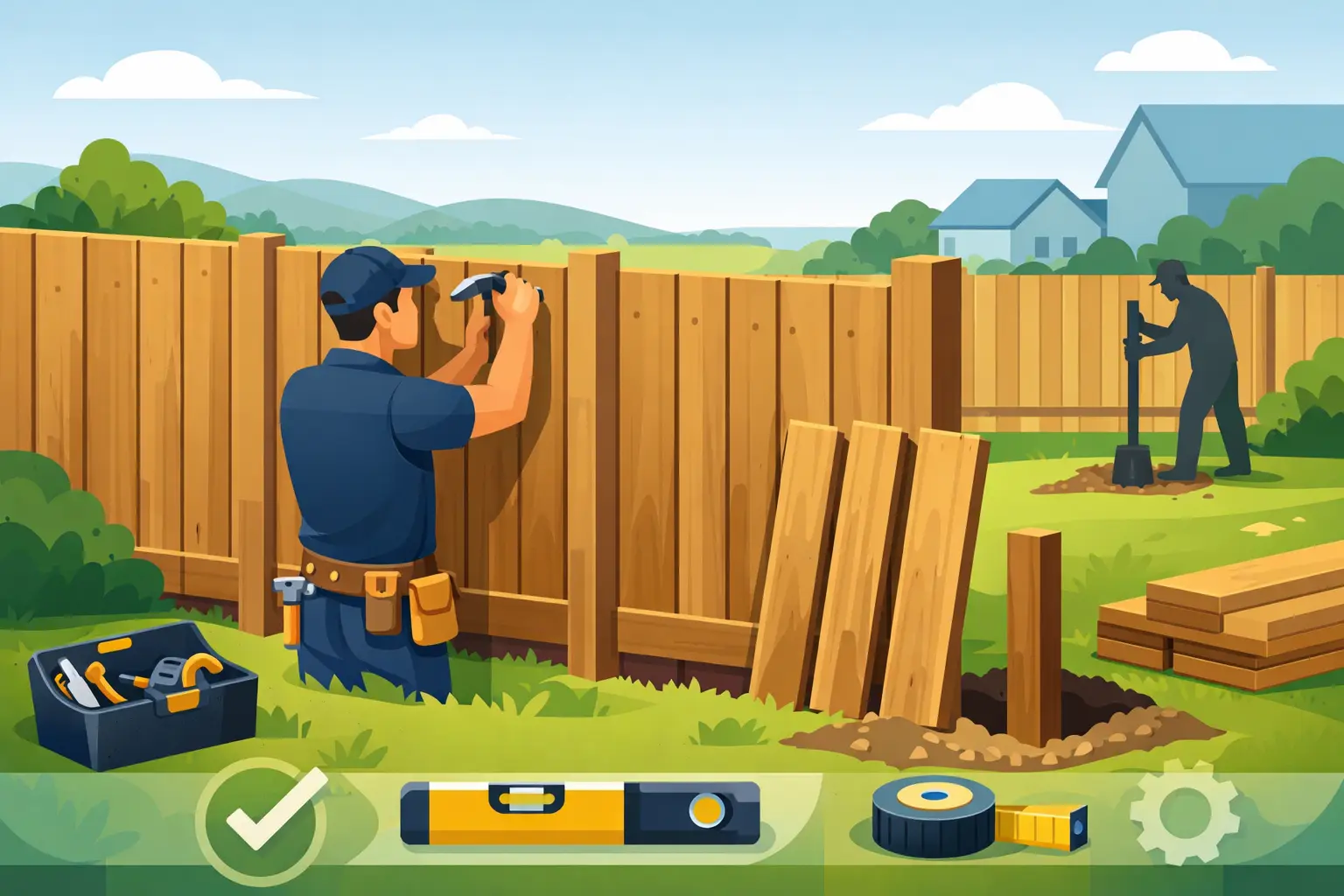
A fence usually fails long before the boards wear out. In most cases, the problem starts below ground – weak post footings, poor spacing, rushed setting out, or timber fixed on top of old rot. That is why closeboard fencing installation is not just about putting up new boards. It is about building a fence line that stays straight, takes the weather, and does the job properly for years.
For homeowners and landlords, closeboard is a solid choice because it gives privacy, stands up well in exposed gardens, and suits both modern and older properties. It is also practical. If a board gets damaged, repairs are often more straightforward than replacing whole decorative sections. But like most exterior work, the result depends on the standard of the groundwork and the quality of the fitting.
Why closeboard fencing installation is a popular choice
Closeboard fencing is built for strength. Instead of relying on thin decorative panels alone, it uses overlapping vertical boards fixed to horizontal rails, supported by properly spaced posts. That construction gives it a sturdier feel than many lighter fence styles, especially in gardens that catch wind or back onto open spaces.
It also gives a clean, tidy finish without looking too formal. For family homes, rental properties and commercial boundaries, that matters. You want something that looks smart but can still take everyday wear, bad weather and the odd knock from garden work.
There is a trade-off, though. Closeboard fencing can cost more than basic lap panels, especially when concrete posts, gravel boards or full replacement of old footings are needed. The extra spend usually pays off in lifespan and reduced repairs, but it is worth knowing from the start that this is a stronger build, not the cheapest quick fix.
What a proper closeboard fencing installation involves
A good installation starts with setting out, not digging at random. The fence line needs checking for levels, boundaries, access points, changes in ground height and anything hidden below the surface. Tree roots, old concrete, drains and buried services can all affect the job.
Once the line is marked, the posts need to be set at consistent centres and installed deep enough for the height of the fence and the conditions on site. In softer ground or exposed areas, that depth and the amount of concrete used become even more important. A fence that looks straight on day one can quickly lean if the post foundations are not right.
Then come the rails, gravel boards and featheredge boards. Each part needs fitting square, level and secure. On sloping ground, the installer may need to step the fence or follow the contour depending on the look required and the site conditions. There is no single right answer in every garden. A stepped fence can look neater and keep board lines consistent, while a raked fence can follow the land more naturally. The best option depends on the gradient and the finish you want.
Timber posts or concrete posts?
This is one of the most common decisions on a fencing job. Timber posts can look more natural and may suit period properties or softer landscaping schemes. If treated properly and installed well, they can perform well. But timber below ground is always the area most vulnerable to moisture and decay over time.
Concrete posts are heavier, harder wearing and often the better long-term option where strength matters most. They resist rot, stand up well to wet ground, and can make future panel or board replacement easier. The downside is appearance. Some customers prefer the look of all-timber fencing and do not want the visible grey post lines.
That is where practical advice matters. If the priority is maximum lifespan and less maintenance, concrete posts and gravel boards often make sense. If the priority is a softer, more traditional finish, timber may be the better fit – provided the materials are treated and the installation is done properly.
Ground conditions make a bigger difference than most people expect
Two fences of the same height can require very different installation methods depending on the garden. Heavy clay, soft wet ground, old brick rubble and root-filled borders all change how posts need to be installed. Even access matters. If materials have to be carried through a narrow side passage rather than brought in directly, it can affect labour time and how the work is planned.
This is one reason quotes can vary. A straight run over clear ground is simpler than replacing a storm-damaged fence with broken posts, tangled shrubs and old concrete buried in the line. A proper quote should reflect the actual site conditions, not just the number of metres.
For properties around Surrey and Middlesex, weather exposure is another factor. Fences in open rear gardens or side returns that catch the wind need careful attention to post depth, spacing and fixing. A stronger specification at the start is usually cheaper than repairing blown-out sections after the first bad spell.
Common problems with poor fencing work
Bad fencing work tends to show up quickly. Posts lean, gravel boards sit unevenly, gates stop closing properly, and gaps appear where the line was not set out correctly. Sometimes the fence looks acceptable from a distance but has already been compromised by shallow footings or weak fixings.
Another common issue is trying to build on top of failed materials. If old posts are loose or the base timbers are rotten, adding new boards will not solve the underlying problem. It only delays the failure. The same goes for setting posts in insufficient concrete or packing them with loose rubble to save time.
There is also the clean-up side, which many customers rightly care about. Old fencing creates a lot of waste – timber, nails, broken concrete and general debris. If that waste is not removed properly, the garden is left half-finished. For any fencing job, site clearance should be part of doing the work properly, not an afterthought.
Repair or full replacement?
Not every damaged fence needs replacing from end to end. If the posts are sound and only a few boards or rails have failed, a targeted repair can be sensible. That is especially true after localised storm damage or impact damage in one section.
But if several posts are moving, the timber is rotting in multiple places, or the line has already started to fail, piecemeal repairs can become false economy. You spend money patching one bay, then another, and still end up replacing the lot later. A proper assessment should tell you which route makes more financial sense.
For landlords and property managers, this matters even more. A fence that repeatedly needs patch repairs can become more disruptive and more expensive over time than one well-planned replacement.
Planning the finish and lifespan
A closeboard fence can be installed for a very functional result or finished as a smarter feature within the garden. Board height, post type, capping, gravel boards and treatment colour all affect the final look. If the fence is highly visible from the house or forms a main boundary, it is worth thinking beyond the basic structure.
Maintenance also matters. Even pressure-treated timber benefits from sensible care. Keeping soil and planting from sitting directly against the boards helps airflow and reduces constant damp contact. If decorative treatment or staining is planned, that should be done at the right stage and with products suited to exterior timber.
A well-installed fence should not need constant attention, but no external timber is completely maintenance-free. Honest advice means saying that upfront.
Choosing the right contractor for closeboard fencing installation
The main thing is not just finding someone who can put up a fence. It is finding a contractor who understands levels, footings, waste removal, site protection and how to deal with the practical issues that come with exterior work. A cheap quote can become expensive if the posts shift, the materials are poor, or the site is left in a mess.
Homeowners and landlords usually want the same basics – clear pricing, a fast response, reliable workmanship and a tidy finish. They also want to know the contractor is properly insured and accountable if anything unexpected comes up during the job.
That straightforward, trade-led approach is exactly why many customers use AJW Specialists Property Maintenance for external work. When one experienced team can handle fencing, repairs, clearance and other outdoor works properly, it removes a lot of hassle.
If you are considering a new fence, the best next step is a proper look at the site rather than guessing from online prices. Every garden is different, and the strongest fence starts with the right plan on the ground.