Chimney Repointing Near Me: What to Check
A chimney can look solid from the ground right up until the mortar starts failing and bits begin dropping onto the roof, the patio or the path below. That is usually when people start searching for chimney repointing near me and want a straight answer on what needs doing, how urgent it is and who they can trust to handle it properly.
Chimneys take a lot of punishment. They sit above the roofline, fully exposed to rain, frost, wind and constant temperature changes. Over time, the mortar joints between the bricks wear away, crack or wash out. Once that happens, water gets in, the stack becomes less stable and small defects can turn into expensive repairs if they are left too long.
Why chimney repointing matters
Repointing is not just about making old brickwork look tidier. The mortar is what helps lock the chimney together and keeps water out of the joints. When that mortar starts breaking down, the brickwork is more vulnerable to movement, frost damage and internal damp issues.
A neglected chimney can lead to loose brickwork, leaks around the flashing, staining on internal walls and damage to roof coverings below. In some cases, the problem is not only water ingress but safety. If sections of mortar are missing or bricks are starting to move, the stack may need attention sooner rather than later.
For homeowners and landlords, the main point is simple. Repointing at the right time is usually far cheaper than waiting until the chimney needs rebuilding.
Signs you may need chimney repointing near me
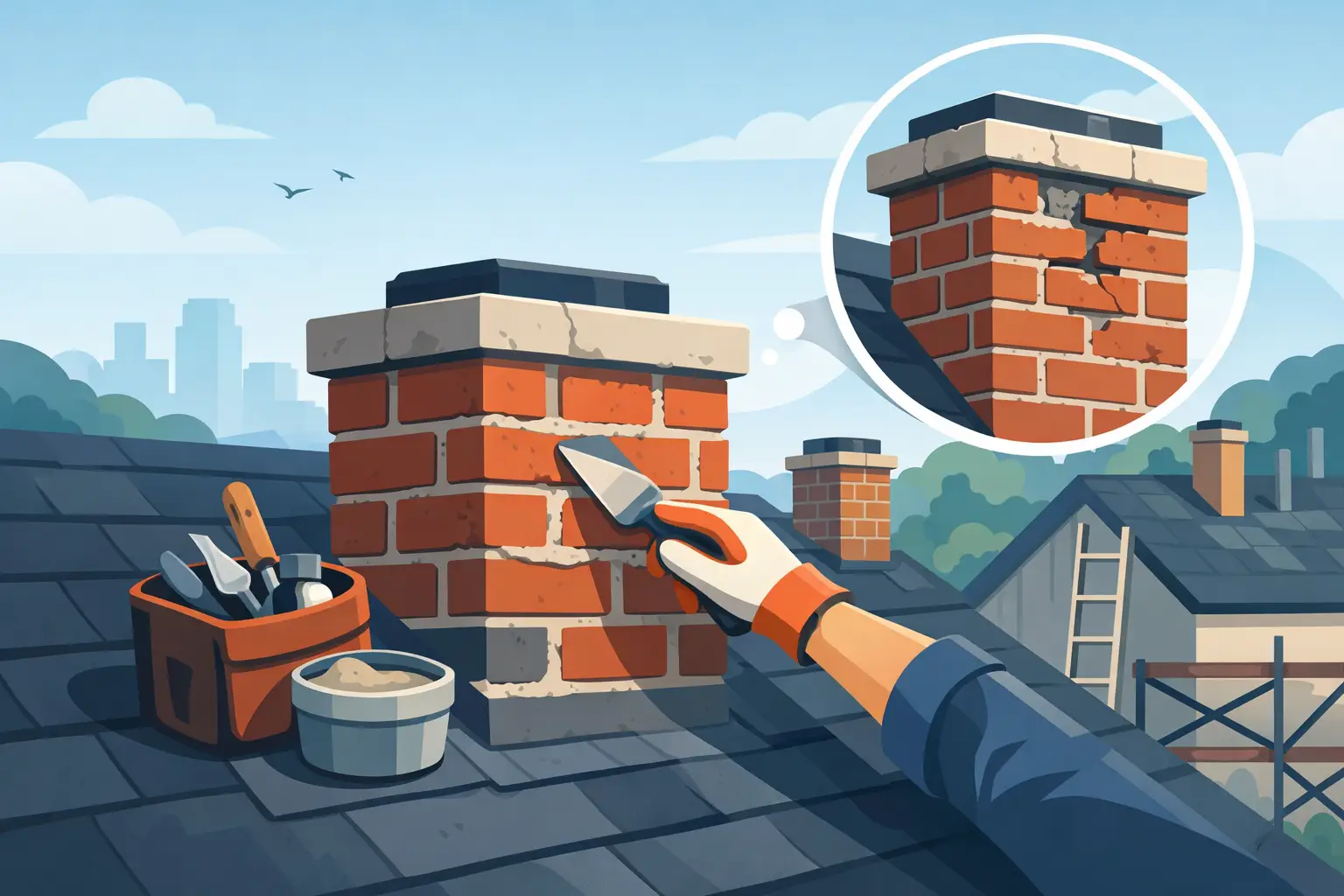
Some issues are obvious, while others are easy to miss from the ground. Crumbling mortar, visible gaps in joints and bits of sandy material collecting in the gutters are common warning signs. You may also notice flaking brick faces, leaning pots or damp patches in the loft or on upstairs chimney breast walls.
If the chimney looks patchy, with hard cement smeared over some areas and open joints in others, that often suggests previous repairs have not been carried out consistently. It does not always mean the whole stack has failed, but it does mean the chimney needs a proper inspection.
Older properties across Surrey and Middlesex often show this kind of wear first on the most exposed elevations. A stack on a detached house may weather differently from one on a terraced property, so the condition can vary even between homes of a similar age.
When it is urgent
Urgency depends on the condition of the stack, not just the age of the property. If bricks are loose, mortar is falling out in chunks, the chimney is visibly leaning or you have had recent storm damage, it should be treated as a priority. The same applies if water is getting into the roof space.
Where there is only light surface erosion, repointing can often be planned before the damage spreads. But if the chimney is already unstable, repointing alone may not be enough.
What the job usually involves
A proper chimney repointing job starts with access and inspection. Because the stack sits at height, safe access matters. Depending on the property, that may involve ladders, scaffold access or a platform. Rushing this part to save money is rarely worth it.
The old defective mortar is then carefully raked out to a suitable depth, without damaging the surrounding bricks. That detail matters. If the joints are only skimmed over, the repair will not last. Once the joints are cleaned out, new mortar is applied and finished to suit the brickwork and exposure level.
In many cases, the job also includes checking the lead flashing, chimney pots, flaunching and nearby roof coverings. There is little point repointing the stack if the flashing has split or the top cement work around the pots is already failing. Good contractors look at the chimney as part of the wider roof area, not as a stand-alone patch repair.
Repointing or rebuilding?
This is where experience counts. Not every chimney needs rebuilding, and not every chimney can be solved with repointing. If the bricks are still sound and the stack is stable, repointing is often the right answer. If the bricks have started spalling badly, the top courses are loose or the chimney has moved, partial or full rebuilding may be the safer option.
There is no benefit in overselling a larger job than necessary, but there is also no point repointing brickwork that is already beyond repair. A sensible inspection should tell you which side of that line your chimney sits on.
What affects the cost
The price of chimney repointing varies because access, height and condition all make a difference. A straightforward stack with easy access is a very different job from a chimney on a steep roof that needs more extensive safety measures.
The extent of the mortar failure matters too. Some chimneys only need localised repointing to the most exposed faces, while others need the full stack doing. If extra repairs are required to the flashing, pots or flaunching, those will affect the final cost as well.
Cheapest is not always best here. Poor repointing tends to fail quickly, especially on exposed chimney stacks. If the joints are not prepared properly or the wrong mortar is used, you can end up paying twice.
How to choose the right local contractor
When people search chimney repointing near me, they are usually trying to solve two problems at once. They want a contractor who can get there quickly, and they want to know the work will be done properly.
Look for a team with real roofing and brickwork experience, not someone who only offers a general handyperson service. Chimneys sit at the junction of roof structure, weatherproofing and masonry, so the repair needs practical trade knowledge. It also helps if the contractor can spot related issues while they are up there, whether that is cracked lead, slipped tiles or waste that needs clearing from the site.
Insurance matters. So does clear communication. You should know what is being repaired, whether access equipment is included, how long the work is likely to take and what condition the site will be left in afterwards. If the explanation is vague on the ground, the workmanship at roof level may be no better.
A local firm also has a practical advantage. Faster response, knowledge of the housing stock in the area and a reputation that is easier to check all count for something. For homeowners in Ashford, Staines and the wider Surrey and Middlesex area, using an experienced local contractor often means less waiting and fewer surprises.
Why local knowledge helps
Properties in this part of the South East range from older brick homes with ageing chimney stacks to more modern houses where poor past repairs are the bigger problem. A contractor working regularly across Ashford, Staines, Feltham, Sunbury and nearby areas is more likely to recognise the common defects quickly.
That local experience can shape the repair. Some stacks need a more sympathetic mortar mix to suit older brickwork. Others need attention to the flashing and roofline at the same time. A one-size-fits-all approach does not work well on chimneys, especially where years of patch repairs have already been carried out.
This is also where a broader property maintenance background helps. If the chimney issue has contributed to water ingress, damaged render, loose brickwork or debris around the property, it is useful to have one insured team that can deal with the wider external repair rather than leaving you to organise several trades.
Questions worth asking before you book
Ask whether the chimney will be inspected fully or just viewed from the ground. Ask if the quote includes access equipment, removal of loose material and site clean-up. It is also worth asking whether any adjoining elements, such as lead flashing or flaunching, will be checked while the work is being done.
If a contractor recommends rebuilding rather than repointing, ask why. The answer should be specific and based on the condition of the stack, not a push for a bigger invoice. Equally, if someone offers a very low price for a quick skim-over repair, be cautious. Chimney work done cheaply often ends up being done twice.
Getting ahead of bigger repair bills
A chimney does not usually fail all at once. It deteriorates gradually, then one winter, one storm or one long spell of rain exposes the problem. That is why early action matters. Repointing carried out at the right stage can extend the life of the stack, protect the roof below and avoid more disruptive structural work later.
If you are looking for chimney repointing near me, the best next step is a proper inspection from a local, insured contractor who understands both roofing and brickwork. A clear quote, honest advice and tidy workmanship go a long way. AJW Specialists Property Maintenance works across Ashford, Staines and surrounding areas with the kind of practical approach homeowners actually need – turn up, assess it properly and do the job right. If your chimney is showing signs of wear, getting it checked now is a lot easier than dealing with a leaking or unstable stack later.