How to Choose Secure Garden Fencing Well
A fence that looks smart on the day it is fitted can still be poor security if the posts move, the gate is weak or the panels can be lifted out. Knowing how to choose secure garden fencing means looking beyond the front face of the fence. You need a boundary that stands up to wind, discourages easy access, keeps children and pets safely contained, and suits the way your property is used.
For homeowners and landlords, the right choice also prevents repeat repair costs. A properly planned and fitted fence should feel solid, look tidy from both sides where possible, and give you confidence that the garden is properly enclosed.
Start with what the fence needs to do
Security means different things on different properties. A rear garden backing onto an alleyway, public footpath or open land needs more protection than a quiet boundary between two well-kept gardens. Equally, a family with a dog may need a fence with no low gaps, while a landlord may need a durable, straightforward solution that can cope with regular use between tenancies.
Think about access points first. Is there a side passage where someone could reach the rear garden? Does the boundary sit beside a driveway, school route or park? Are valuable tools, bikes or garden equipment stored outside? These details affect the height, style and gate arrangement that will make sense.
Privacy can help security, but a completely solid fence is not always the answer. In some locations, being able to see movement around a side entrance is useful. The best option depends on the layout of the property, not simply on choosing the tallest panel available.
How to choose secure garden fencing by material
Timber remains a popular choice across Surrey and Middlesex because it is practical, repairable and suits most gardens. For strength, closeboard fencing is usually a better security choice than lightweight lap panels. It is built from vertical boards fixed to horizontal rails, so it creates a continuous, sturdy boundary with fewer obvious weak points.
Featheredge closeboard fencing is particularly useful for long runs, uneven ground and exposed gardens. It can be built to the required line and height, and individual boards can be replaced later if needed. A good-quality treated timber fence also has a more substantial feel than budget panels, which matters when security is the priority.
Concrete posts and gravel boards are worth considering where long-term durability matters. Concrete will not rot at ground level and gravel boards keep timber away from damp soil and splashback. They are heavier and can look more functional than all-timber fencing, but they provide a strong framework and reduce the chance of premature post failure.
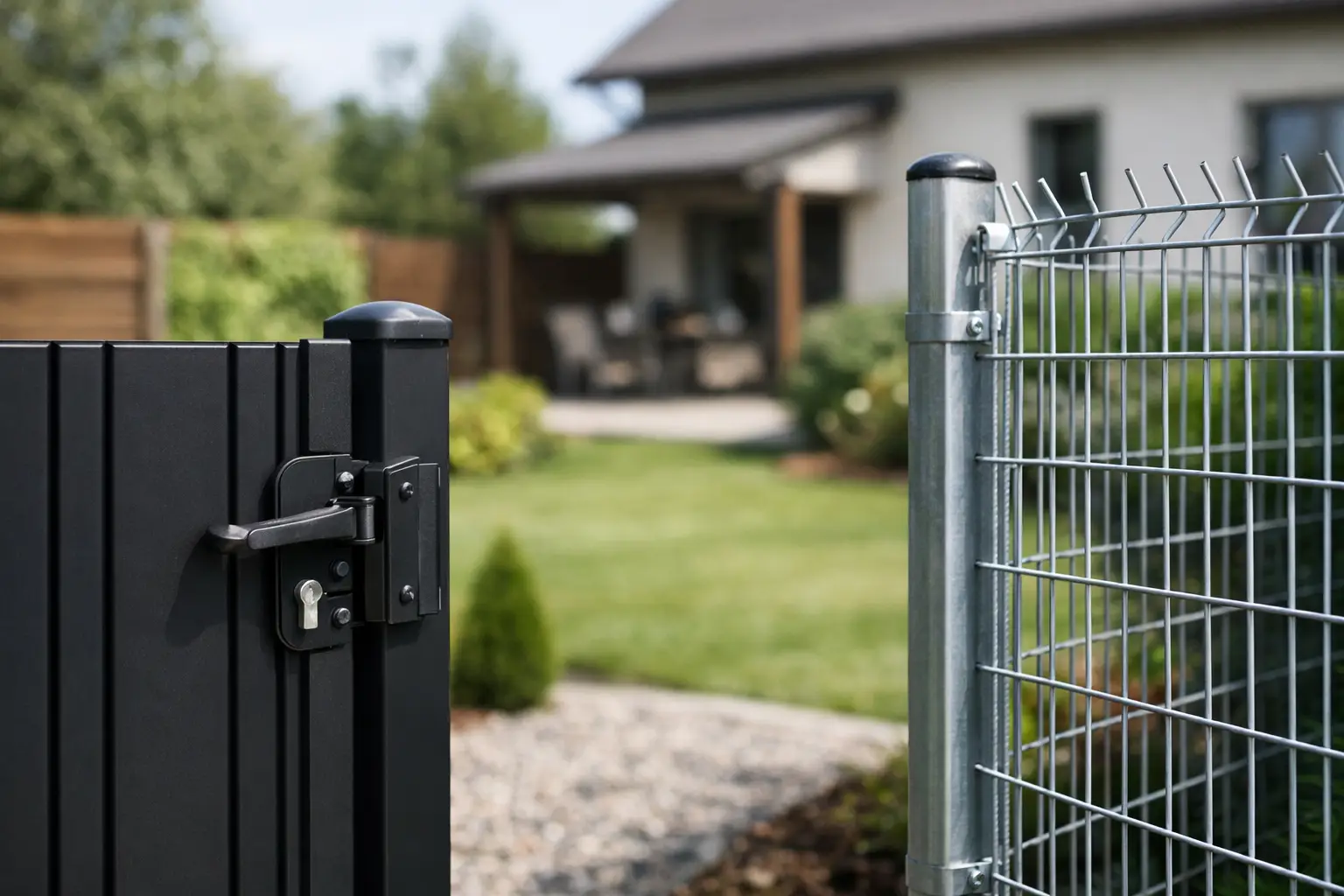
Metal fencing can be a sensible option for front boundaries, side passages and commercial areas where visibility matters. Welded mesh and vertical bar fencing are difficult to climb or cut casually when correctly specified, while allowing light through. However, it offers less privacy and may not suit every residential garden. Composite fencing is tidy and low-maintenance, but the strength of the overall installation still relies on the posts, rails and fixings. Do not assume a premium-looking board system is automatically more secure.
Posts and foundations do the real work
Most fencing failures start below ground. A new panel will not remain secure if the posts are too shallow, poorly supported or already weakened by rot. Wind puts a surprising load on a solid fence, especially along an exposed boundary, and that pressure is transferred directly into the posts.
For timber posts, use properly pressure-treated timber designed for ground contact. The post should be set deep enough for the fence height and ground conditions, with a firm concrete footing where appropriate. The soil, drainage and exposure of the site all matter. A wet garden may need extra attention to drainage, while a fence in a windy open area may need stronger posts, closer spacing or a different design.
Fence posts should be upright, evenly spaced and aligned before the boards or panels are fixed. This sounds basic, but rushed installation creates a fence that looks uneven and puts strain on the fixings. It is also worth checking that any existing tree roots, old concrete or buried services are considered before digging begins.
Choose a height that protects without causing a dispute
A higher fence can improve privacy and make casual access more difficult, but height is not a free-for-all. In many cases, a boundary fence up to around two metres is permitted development, but rules can be different next to a highway, near listed buildings, in conservation areas or where planning conditions apply. If the fence is replacing an existing boundary, do not assume the same height is automatically acceptable.
Check your property deeds and speak to the neighbour where the boundary is shared or unclear. The deeds may show which side is responsible for maintenance, although they do not always settle every question. Agreeing the line, style and working access before installation is far easier than dealing with a disagreement after materials have arrived.
Avoid adding trellis purely to get extra height without checking the local rules. Trellis can be useful for screening, but it is still part of the overall structure and may affect what is permitted. A contractor should be able to flag obvious concerns, but the property owner remains responsible for obtaining permission where it is needed.
Do not let the gate become the weak point
A secure garden fence needs a secure gate. Side gates are often the easiest route into a rear garden, yet they are commonly built from thin timber, fitted with light hinges and secured by a simple latch. If the gate can be lifted off its hinges, forced at the frame or opened from outside, the rest of the fence offers limited protection.
Choose a framed and braced gate rather than a basic boarded gate. The diagonal brace should run from the bottom hinge side to the top closing side, helping prevent the gate from dropping over time. Use heavy-duty galvanised or stainless-steel hinges, quality fixings and a lockable bolt or hasp suited to the gate design. For gates facing a public route, position fixings so they cannot be easily removed from outside.
The frame matters as much as the gate itself. Secure gate posts need the same solid installation as the main fence, and the gap beneath the gate should be small enough to deter access while allowing it to open over the ground. If there is a slope, the gate may need to be purpose-made rather than trimmed to fit on site.
Pay attention to panel fixing and anti-lift details
Standard fence panels dropped into slotted concrete posts are quick to install, but they can sometimes be lifted out if there is enough clearance. This may not be a major concern on a low-risk garden boundary, but it is worth addressing where security is a priority. Secure fixings, capping or purpose-designed retaining clips can make removal far more difficult.
With closeboard fencing, boards should be firmly fixed with appropriate nails or screws and supported by sound rails. Avoid leaving wide gaps at the bottom or edges of the fence. These gaps can become access points for animals, create a place for tools to be pushed through, or simply make the boundary look unfinished.
Also consider what sits against the fence. A shed, wheelie bin, stacked timber or garden furniture can become an easy climbing aid. Keeping climbable items away from the boundary is one of the simplest security improvements you can make, and it costs nothing.
Plan for weather, maintenance and future repairs
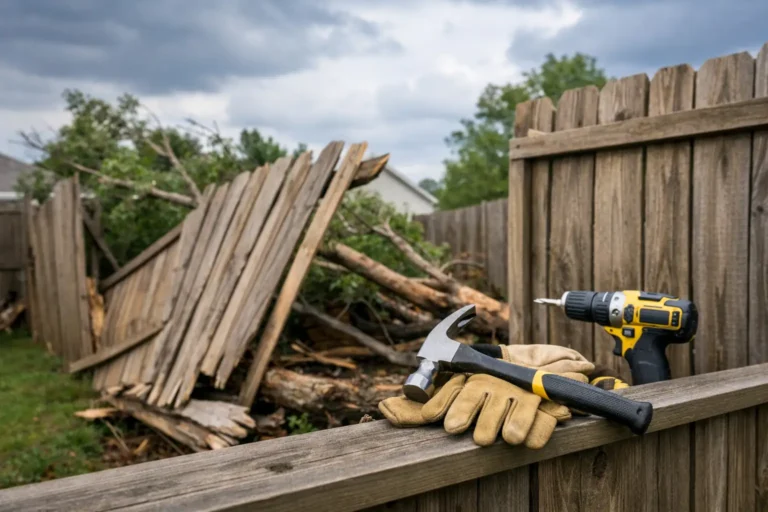
Security fencing has to survive British weather as well as unwanted attention. Water sitting around timber posts, loose panels after a storm and overgrown climbers all shorten its working life. Treating cut ends, keeping soil and plants away from the boards where possible, and checking the fence after severe wind will help catch small problems early.
A fence does not need constant work, but it should not be ignored for years. Check for loose rails, leaning posts, damaged gate hinges and cracks around concrete footings. Repairing one loose board or resetting a post is usually far cheaper than replacing an entire run after it has blown down.
When replacing part of an older boundary, match the new work to the strength of the existing sections. There is little value in fitting a heavy new gate to weak posts or joining strong closeboard fencing onto rotten panels. Sometimes a full replacement is the more sensible investment because it gives the whole boundary a consistent, secure structure.
Get the installation right from the outset
The best materials will not compensate for poor workmanship. A proper site check should cover the boundary line, ground condition, access for materials, old fence removal, waste disposal and the practical needs of the household. It should also establish whether the work needs to be completed in stages so the garden is not left open overnight.
For properties in Ashford, Staines and the surrounding area, AJW Specialists Property Maintenance can assess damaged or insecure fencing, remove old materials responsibly and provide a clear quote for replacement work. The aim is straightforward: secure posts, suitable materials, tidy fitting and a clean site once the job is complete.
A well-built fence should not feel like a temporary screen between properties. Choose one that suits the ground, secure the gate properly and deal with small defects early, and your garden boundary will keep doing its job long after fitting day.