Patio and Driveway Cleaning That Lasts
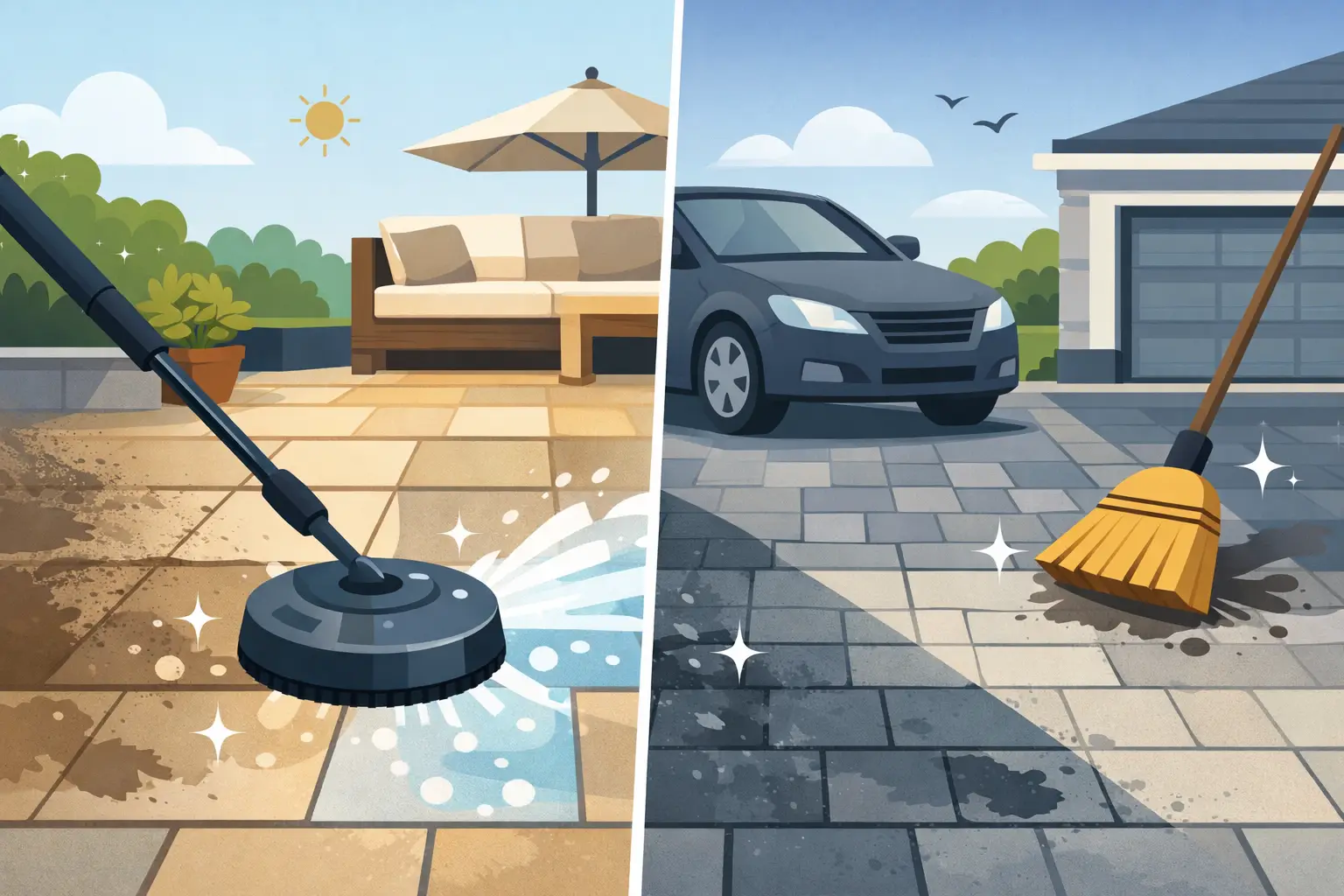
A driveway covered in black spots and a patio turning green do more than spoil the look of a property. They become slippery, harder to maintain and, if left too long, more expensive to put right. Proper patio and driveway cleaning is not just about appearance. It is about safety, surface care and keeping the outside of your property in good working order.
For homeowners, landlords and small businesses, this kind of cleaning often gets pushed back until the surface looks beyond saving. The trouble is that dirt, algae, moss, oil staining and weed growth do not sit on the top for long. They work into joints, pores and cracks, especially on block paving, concrete slabs, tarmac and natural stone. The longer it sits, the more work is needed and the greater the chance of damage.
Why patio and driveway cleaning matters
Most exterior surfaces take a steady beating from the British weather. Rain, shade, fallen leaves and damp air all help moss and algae spread quickly, especially in sheltered gardens and north-facing front drives. Add foot traffic, parked vehicles and general grime from roads, and the surface starts to age fast.
There is also the safety side. A clean patio should not feel greasy underfoot after a bit of drizzle. A drive should not be full of mossy patches that become slick in winter. For rental properties and commercial premises, that matters even more. Slips and trips are not just inconvenient. They can turn into complaints, liability issues and avoidable repair bills.
Appearance still counts as well. The front of a property gives people their first impression. Whether you are keeping your own home in good shape, preparing a rental between tenants or smartening up business premises, a properly cleaned driveway and patio make the whole place look cared for.
What builds up on patios and driveways
Not every surface gets dirty in the same way, and not every stain should be treated the same. That is where a lot of DIY jobs go wrong.
Moss and algae are common across Surrey and Middlesex, especially where surfaces stay damp. They spread across joints and shaded areas and can make paving extremely slippery. Lichen is different again. Those stubborn black and white marks that seem baked into the surface often need more than a quick wash.
Driveways also pick up oil leaks, tyre marks, rust stains, general road dirt and sometimes cement or paint residue from building work. Patios are more likely to suffer from leaf staining, barbecue grease, food spills and heavy weed growth between slabs. Block paving tends to trap dirt in the joints, while natural stone can be marked if the wrong pressure or cleaning product is used.
That is why the right approach depends on the surface and the problem. More pressure is not always better.
Patio and driveway cleaning methods
The best cleaning jobs are not rushed. They start with identifying the surface, the level of contamination and any weak points such as loose pointing, sunken slabs or damaged block edges.
Pressure washing and power washing
For many patios and drives, pressure washing is the main part of the job. It is effective at stripping away surface grime, moss and general build-up. Used properly, it can transform tired paving.
But there is a difference between cleaning and causing damage. Too much pressure on old mortar joints, weathered concrete or soft stone can leave lines, expose aggregate or loosen pointing. Tarmac needs particular care, as aggressive washing can rough up the surface. This is why experienced handling matters.
Treatment for weeds, moss and algae
If weeds are pulled out without treating the root, they often come straight back. The same goes for moss that is only skimmed off the top. In many cases, surface cleaning works best when combined with suitable treatment to reduce regrowth and leave the area cleaner for longer.
It depends on the site, the season and how the area is used. A heavily shaded patio under trees may need more regular attention than an open south-facing drive.
Re-sanding and finishing block paving
Block paving often needs more than washing. Once cleaned, the kiln-dried sand between the joints can be reduced or washed out. Re-sanding helps lock the blocks back in place and supports the surface properly. Skipping that stage can leave the paving more vulnerable to movement and weed growth.
Sealing – useful, but not always essential
Some customers ask about sealing after cleaning. In the right situation, it can help reduce staining, improve appearance and make future maintenance easier. But it is not a magic fix and it is not right for every surface.
If the paving is still damp, if the base is unstable or if the surface has existing issues, sealing too early can create more problems than it solves. It is one of those jobs where honest advice matters more than a quick upsell.
Common mistakes with DIY cleaning
A lot of property owners start with a hired jet washer and good intentions. Sometimes that is enough for a light freshen-up. Quite often, though, the results are patchy.
One common problem is striping. That happens when pressure is uneven and leaves visible clean lines across the paving. Another is joint damage, where mortar or block paving sand is blasted out and the area is left weaker than before. On natural stone, the wrong cleaning method can mark the face or change the finish.
There is also the issue of drainage and mess. Patio and driveway cleaning shifts a lot of sludge, moss and debris. If that waste is not managed properly, it can block drainage points, stain nearby walls and leave the site looking worse before it gets better. A proper job includes clean-up, not just spraying dirt from one place to another.
When to have your patio or driveway cleaned
There is no single perfect time, but spring and early summer are popular for obvious reasons. Surfaces have often built up grime over winter and people want gardens and frontages looking right again.
Autumn can also be a sensible time, especially if leaves are starting to stain paving or if moss growth is increasing with wetter weather. For landlords, timing often depends on tenancy changes or planned maintenance. For businesses, it may be about presenting the premises properly year-round.
If a surface has become slippery, the best time is simply now. Waiting rarely improves the job.
What a professional service should include
A proper exterior cleaning service should be straightforward from the start. You want to know what is being cleaned, how it will be done, what condition the surface is in and whether any follow-on work is worth considering.
That may include re-pointing small areas, re-sanding block paving, clearing surrounding debris or dealing with related exterior issues nearby. This is often where using an experienced property maintenance team makes life easier. If a loose slab, damaged edging, cracked brickwork or drainage problem shows up during the cleaning work, it can be dealt with properly rather than ignored.
AJW Specialists Property Maintenance works with exactly that practical mindset. The aim is not to give a patio a quick cosmetic blast and leave. It is to get the area clean, safe and presentable, while spotting any obvious issues that may need attention before they turn into bigger repairs.
Choosing the right contractor
When booking patio and driveway cleaning, the cheapest quote is not always the best value. It is worth asking what is included, whether the team is insured, how waste and debris will be handled and whether they have experience with the specific surface at your property.
A contractor who works across general exterior maintenance can often give better practical advice than someone only focused on the wash itself. That matters if your paving has dropped, if drainage is poor, or if the area needs minor repair work alongside cleaning.
Local knowledge helps too. Properties across Ashford, Staines, Feltham, Sunbury, Hanworth, Bedfont, Laleham and Shepperton all deal with similar weather patterns, damp conditions and seasonal build-up. A team used to working in the area will know what tends to come back quickly and what cleaning approach holds up best.
Keeping it cleaner for longer
Once the surface has been properly cleaned, a bit of upkeep goes a long way. Sweeping regularly, clearing leaves before they sit and stain, and dealing with weed growth early all help slow the build-up.
It is also worth keeping an eye on drainage. Standing water encourages algae and moss, and it often points to another issue such as blocked gullies or uneven paving. Small maintenance jobs tackled early are usually far cheaper than letting the whole area deteriorate.
A clean patio or driveway should not be a once-in-ten-years rescue job. With the right cleaning method and sensible maintenance, it can stay in good condition and keep doing its job properly. If your outside surfaces are looking tired, slippery or stained, getting them sorted now is often the simplest way to protect both the look and the safety of the property.