Best Emergency Roof Solutions for Fast Protection

A damp patch spreading across the ceiling at 10pm is not a job to leave until Monday. Water can travel along rafters, insulation and wiring before it becomes visible, so the stain you can see is not always directly below the fault. The best emergency roof solutions focus on making the property safe, stopping further water getting in and arranging a proper repair before temporary damage turns into rotten timber, failed plaster or mould.
For homeowners, landlords and small business occupiers, the priority is clear: protect people first, then protect the building. A fast response matters, but so does choosing work that deals with the actual cause of the problem rather than simply covering the visible leak.
What counts as a roofing emergency?
Not every missing tile requires an immediate night-time callout. However, a roof issue becomes an emergency when it creates a safety risk or allows water to enter the property in a way that could rapidly worsen. This includes active leaks through a ceiling, storm damage that has exposed the roof structure, loose materials at risk of falling, and damage near electrical fittings.
A flat roof that is holding standing water after heavy rain also needs prompt attention, particularly where the membrane has split or water is finding its way indoors. On pitched roofs, slipped tiles, cracked flashing, damaged ridge tiles and blocked valleys are common causes of sudden leaks.
If water is close to lights, sockets or consumer units, do not touch electrical fittings or stand beneath the affected area. Switch off the relevant circuit only if it is safe to do so, keep people away from the area and contact an emergency electrician as well as a roofing contractor where required.
Best emergency roof solutions: what works first
The right solution depends on the roof type, the weather and the scale of the damage. A responsible contractor should assess the risk before promising a permanent repair. During high winds, lightning or driving rain, it may not be safe to access a roof immediately. In those cases, internal protection and a secure temporary weatherproofing measure can be the right first step.
Emergency tarpaulin and temporary covers
A properly secured roof cover can reduce water ingress where tiles, felt, leadwork or roof sheets have been damaged. This is often the quickest option after a storm, but it is a temporary measure, not a substitute for repair. A loose or poorly fitted tarpaulin can catch the wind, damage more tiles and become a danger to neighbours or passers-by.
Avoid climbing onto the roof yourself, especially in wet or windy conditions. Working at height without the right access equipment, footing and safety measures is one of the biggest risks in an emergency. A contractor can secure a cover safely and inspect what sits underneath it.
Replacing slipped, broken or missing tiles
Where damage is localised, replacing broken or missing tiles may be the most direct solution. The surrounding tiles, fixings and underfelt should still be checked. A tile can slip because of storm impact, but it can also point to failing nails, deteriorated battens or an ageing roof covering.
Matching replacement tiles is worthwhile where possible, especially on visible elevations. More importantly, they need to be fitted correctly so the repair sheds water as intended and does not create another weak point.
Flashing and leadwork repairs
Many leaks begin around chimneys, roof valleys, dormers, skylights and wall abutments rather than in the main roof covering. Flashing may have lifted, cracked or separated from the masonry, leaving a narrow gap that lets in a surprising amount of water.
A temporary seal may slow a leak in dry conditions, but long-lasting work usually means repairing or renewing the flashing properly. The trade-off is cost against certainty: a quick patch can buy time, while damaged leadwork or failed mortar often needs a fuller repair to prevent repeat callouts.
Flat roof patching and membrane repairs
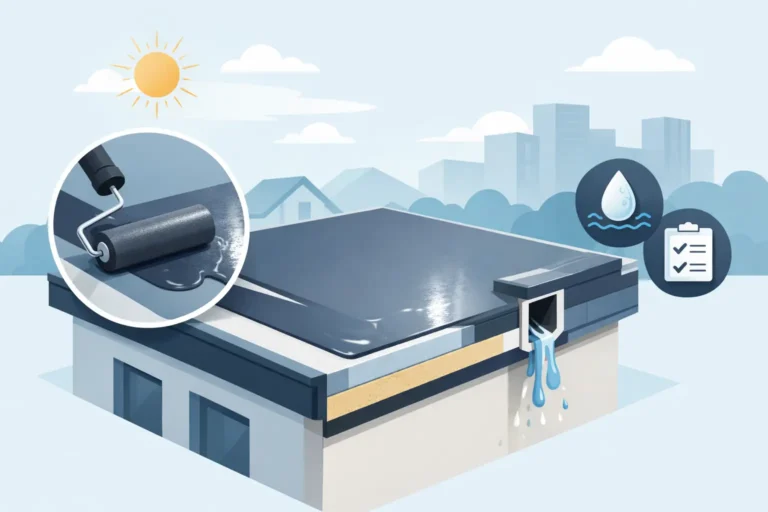
Flat roofs need a different approach. Splits, blisters, open seams and damaged edge trims can allow water beneath the surface, where it may travel well beyond the visible defect. An emergency patch can stop the immediate ingress, but trapped moisture beneath an older roof covering may mean a larger repair is needed once the area can be inspected properly.
A good assessment should check for soft areas in the deck, failed drainage and ponding water. Repeated patching can be sensible on a relatively sound roof with isolated damage. On a worn-out membrane, it may only postpone the cost of replacement.
Securing loose ridge tiles, gutters and roofline items
Loose ridge tiles, fascia boards, soffits and gutters are not only a water problem. In strong wind, they can become a falling hazard. The first job is to make the area safe and prevent materials from dropping onto paths, vehicles or neighbouring property.
Gutters should also be cleared where blockages are forcing water back under roof edges or overflowing against walls. Clearance alone will not fix damaged roof felt or rotten fascia, but it can remove a common source of avoidable water damage.
What to do while you wait for help
You can take sensible steps from ground level or inside the property. Move furniture, rugs and electrical items away from the leak. Place buckets or containers under drips and use towels to limit water spreading across floors. If a ceiling is bulging with water, stay clear of it. It may collapse without warning.
Take clear photographs and short videos of the leak, ceiling damage and any visible external damage from a safe position. This can help a roofer understand the issue before arrival and gives you useful evidence for an insurance claim. Keep receipts for emergency work and any damaged belongings.
Do not block downpipes, force water off a flat roof or attempt to nail sheets or tarpaulins to the roof from a ladder. These actions can worsen the damage, invalidate insurance cover or put you at serious risk.
Choosing an emergency roofer without adding to the problem
Urgent work can make people feel pressured into accepting the first offer. You still need basic reassurance that the contractor is legitimate, insured and clear about what they are doing. Ask whether the initial visit is to make the roof safe, whether temporary works are included, and what permanent repair is likely to follow.
A clear contractor will explain the fault in plain terms, show photographs where practical and separate emergency protection from recommended follow-up work. They should also leave the site tidy, remove damaged materials responsibly and provide a written quote for larger repairs.
For properties in Ashford, Staines and surrounding Surrey and Middlesex areas, AJW Specialists Property Maintenance can respond to urgent roofing issues and manage related exterior repairs and waste clearance where storm damage has left a site unsafe or cluttered. One accountable team can make a real difference when the last thing you need is to coordinate several trades.
Temporary repair or full roof repair?
This decision comes down to the roof’s condition and the reason it failed. A single cracked tile on an otherwise sound roof may only need a straightforward replacement. A leak caused by widespread brittle felt, rotten battens, recurring flat-roof splits or failed flashing around several areas needs a broader repair plan.
Temporary work is worthwhile when weather conditions prevent full repairs, materials need to be sourced or the damage needs time to dry before a permanent fix. It should be clearly described as temporary. If a contractor cannot explain why a patch is suitable or what happens next, ask more questions before agreeing to further work.
Landlords should also act promptly even where tenants report only a small drip. Early repairs protect the property, reduce disruption and demonstrate that the issue has been handled responsibly. For commercial premises, quick action can help prevent stock damage, slip hazards and unnecessary closure.
Preventing the next emergency
Most roof emergencies have a warning period, even if it is easy to miss. Check for slipped tiles after storms, overflowing gutters in heavy rain, moss build-up in valleys, cracked sealant around roof windows and stains in loft spaces. A simple inspection after severe weather can identify small faults before the next downpour finds them.
Keep trees cut back from the roof where branches are rubbing tiles or dropping heavy debris into gutters. Arrange repairs when they are small, accessible and dry rather than waiting until water is entering the property. The cheapest roof emergency is usually the one prevented by timely maintenance.
If your roof is leaking now, keep the area safe, document the damage and arrange professional help as soon as possible. Fast protection is valuable, but a proper diagnosis is what gives your roof a reliable chance of keeping the next storm outside.