Repair Roof or Replace? What to Check

A small leak rarely stays small for long. If water is getting into your loft, staining ceilings or running behind guttering, the real question is usually not whether you need roofing work, but whether to repair roof or replace it before the damage spreads.
For homeowners and landlords, this can feel like a costly decision either way. The trouble is that patching the wrong roof wastes money, while replacing a roof too early can be just as frustrating. The right answer depends on the age of the roof, the type of damage, how widespread the problem is and whether the structure beneath has been affected.
Repair roof or replace – start with the cause
The first step is not looking at the symptom. It is finding the cause. A missing tile after high winds is very different from a long-term leak caused by worn felt, rotten battens or sagging timbers. From the ground, both can look similar. On closer inspection, one may need a straightforward repair and the other may point to a roof that is nearing the end of its working life.
This is where a proper inspection matters. Water does not always enter directly above the stain you can see indoors. It can travel along timbers, under underlay and across ceiling voids before showing up. A roof that appears sound from the front may have failed flashings, damaged valleys or hidden wear on the rear slope.
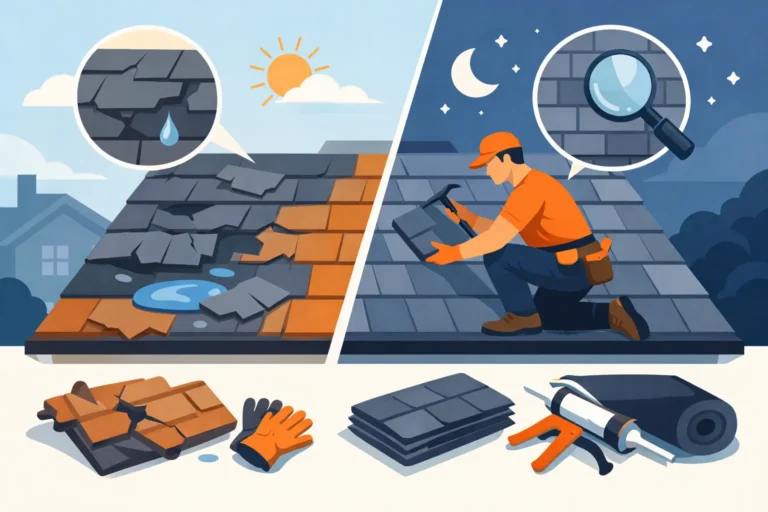
In practical terms, isolated faults usually suit repair work. Widespread deterioration usually points towards replacement. The difficulty is knowing which side of that line your roof sits on.
When a roof repair is usually the sensible option
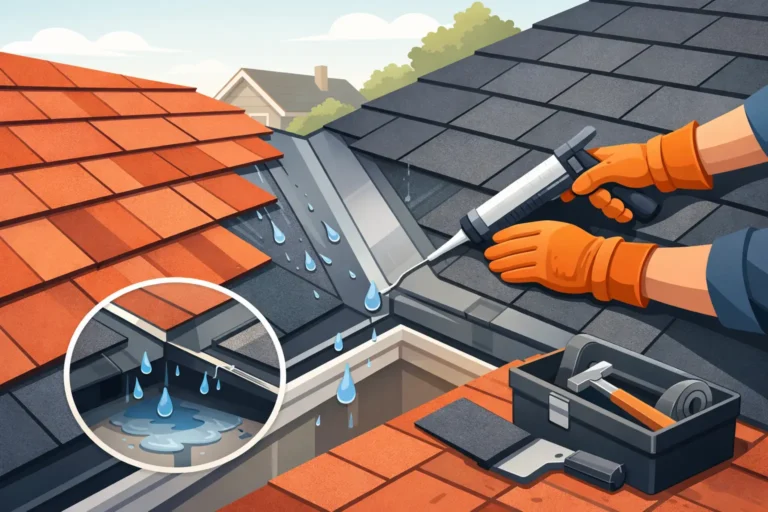
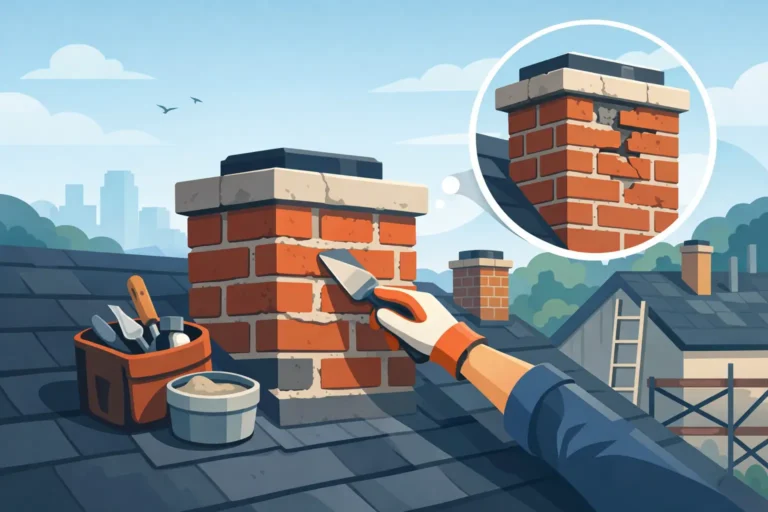
A repair is often the right call when the damage is localised and the rest of the roof is still in reasonable condition. This includes slipped or cracked tiles, minor lead flashing issues, damage around a chimney, leaks around a roof window, and small flat roof defects where the surrounding material is still serviceable.
Storm damage is another common example. If strong winds have lifted ridge tiles or dislodged a section of covering, that does not automatically mean the whole roof has failed. If the structure below is dry and stable, a targeted repair can restore protection without unnecessary extra cost.
Repairs also make sense on newer roofs. If the roof is well within its expected lifespan and the materials have not generally deteriorated, replacing the whole thing would be excessive. In that case, the priority is to deal with the fault quickly, prevent water ingress and check for any related damage to insulation, timbers or plaster.
A good repair should do more than hide the issue. It should deal with the cause, match materials as closely as possible and leave the area weather-tight. If the repair has been done properly, there is no reason it should be seen as a second-best option.
When replacement is the better long-term decision
There comes a point where repeated repairs stop being good value. If leaks keep appearing in different areas, tiles are becoming brittle, mortar is failing across multiple sections, or the roof deck on a flat roof has begun to deteriorate, replacement is often the more sensible investment.
Age matters here. Many roofs can last for decades, but no roof lasts forever. Once a roof gets towards the end of its expected life, each repair solves one problem while the next weak point is already forming nearby. You can end up paying for callout after callout without ever getting a reliable result.
Replacement is also worth serious consideration if there is structural movement, widespread damp in the roof space, rot in supporting timbers, or signs that previous patch repairs have built up over time without fixing the overall condition. If more than one area is failing, or if access and labour costs for repeated repairs are mounting up, a full replacement can actually cost less over the medium term.
For landlords and commercial occupiers, there is also the issue of ongoing liability. A roof that keeps leaking can damage ceilings, electrics, stock, decoration and tenant belongings. At that stage, the cost of delay may be higher than the cost of renewal.
Key signs that help answer repair roof or replace
Some warning signs point more clearly in one direction than others. If you are seeing one isolated drip after a storm, the answer may be simple. If you are seeing multiple signs together, replacement becomes more likely.
Inside the property, look out for recurring ceiling stains, peeling paint near upper walls, damp smells in the loft, mould growth and daylight visible through the roof covering. These signs suggest that water is getting in regularly rather than through one-off weather damage.
Outside, check for slipped tiles, uneven roof lines, worn ridge pointing, damaged flashing, blocked or broken guttering, moss build-up trapping moisture and sagging sections. Flat roofs may show blistering, splits, standing water or lifting edges.
One sign on its own does not always mean the roof has reached the end. Several signs together usually mean the roof needs more than a quick patch.
Cost is important, but value matters more
Most customers start with cost, which is understandable. A repair is cheaper upfront than a replacement in most cases. But the cheapest option today is not always the cheapest option over the next few years.
If a repair gives you several more years from a sound roof, it is money well spent. If a repair only delays a major problem by a few months, that same money has effectively been thrown at a temporary fix. This is especially true where water damage continues behind the scenes, affecting felt, battens, insulation and ceilings.
There is also the issue of access. Scaffolding, labour, waste removal and matching materials all affect roofing costs. Paying those setup costs multiple times for piecemeal repairs can quickly narrow the gap between repair and replacement.
That is why a straightforward quote should explain not just the immediate job, but what condition the wider roof is in. Customers need the truth, not a quick sale either way.
Why quick patch jobs can cost more later
There is a difference between an emergency repair and a rushed fix. Emergency work is about making the roof safe and watertight as quickly as possible after storm damage or sudden leaks. That is often the right move. A rushed fix, on the other hand, is when the visible issue is covered over without checking the surrounding materials or underlying cause.
This is where trouble starts. Water can stay trapped in timbers. Felt can continue tearing under tiles. Small flat roof splits can widen. Lead details can keep lifting. What looked like a budget fix turns into a bigger repair because the original fault was never fully dealt with.
A dependable contractor should tell you plainly if a temporary repair is suitable, or if it is only buying short-term time before replacement is needed.
Different roof types fail in different ways
Pitched roofs and flat roofs do not age in the same way, and that affects the repair-or-replace decision. On a tiled or slated roof, localised damage is often more repairable if the surrounding covering is still secure. The weak points are commonly flashings, ridges, valleys and isolated slipped sections.
Flat roofs can be different. Small splits or failed joints may be repaired if caught early, but once water gets beneath the surface or the deck begins to soften, problems can spread wider than they first appear. Ponding water is another warning sign. If water sits on the roof for long periods, it tends to shorten lifespan and expose drainage issues.
This is why no honest roofer should give a firm answer from a photograph alone. The roof type, age, previous workmanship and current condition all matter.
What a proper inspection should tell you
A useful roof inspection should leave you with a clear idea of three things: what has failed, how far the damage extends and whether repair work is likely to hold.
That means checking more than the obvious leak point. It should include the condition of coverings, flashings, ridges, edges, valleys, guttering and, where possible, the roof space beneath. If the roof has been leaking for some time, any damage to timber, insulation or internal finishes should be factored into the advice.
At AJW Specialists Property Maintenance, the approach is simple – give customers a straight view of the roof condition, explain whether a repair is worth doing, and carry out the work properly if it is.
The right choice is the one that stops the problem
If your roof has one clear fault and the rest is in good order, a professional repair is often the best use of your money. If the roof is worn out, leaking in several places or showing signs of deeper failure, replacement is usually the safer and more cost-effective route.
The main thing is not to leave it and hope for the best. Roof problems rarely improve on their own, and the longer water gets in, the more expensive the job tends to become. If you are weighing up whether to repair or replace, get it inspected properly and make the decision based on the roof you actually have, not the one you hope will last another winter.