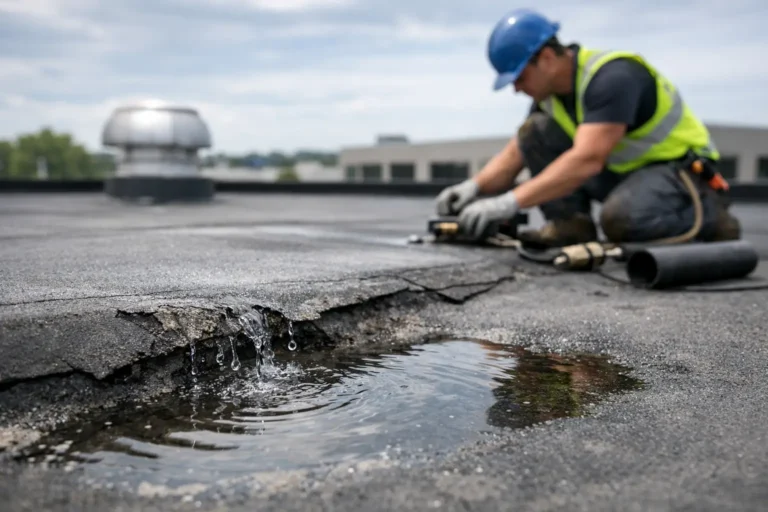
Felt Flat Roof Replacement: When and Why

A flat roof usually gives you warnings before it fails properly. The trouble is, those warnings are easy to ignore – a small split in the felt, a patch of standing water, a damp mark on the ceiling that only shows after heavy rain. By the time you start looking into felt flat roof replacement, the roof covering may already be at the point where another repair is only buying a bit of time.
For homeowners, landlords and small business owners, that matters because a failing flat roof rarely stays as just a roofing problem. Water gets into timber, insulation, plaster and electrics. What starts as one leak can quickly turn into a bigger, more expensive job. That is why it helps to know when replacement is the sensible option, what the work involves, and what you should expect from the contractor doing it.
When a felt flat roof replacement makes more sense than a repair
Not every damaged flat roof needs replacing. If the problem is localised – one split, a lifted edge, a small area of damage around a flashing – a proper repair can be the right call. The key point is whether the roof is still basically sound.
Once felt starts failing in several places, repairs become less cost-effective. You may stop one leak only for another to appear a few months later. Older felt roofs often become brittle with age, especially after years of sun, frost and standing water. If the roof has already had several patch repairs, that is usually a sign the covering is nearing the end of its working life.
Age is a factor, but condition matters more. Some felt roofs last well if they were installed properly and looked after. Others fail early because the deck moves, drainage is poor, or the original workmanship was poor. If blisters, cracks, open seams and ponding are all showing at once, replacement is often the better long-term spend.
Signs your felt flat roof needs replacing
A proper inspection should confirm the full condition of the roof, but there are common warning signs property owners can spot themselves.
Persistent leaks are the obvious one, especially if they keep returning after repair work. Water stains on ceilings or walls, bubbling paint, mould growth and damp patches near the roofline all suggest moisture is getting through.
Outside, look for splits in the felt, lifting at edges, exposed joints, sagging sections and areas where water sits for long periods after rain. Ponding does not always mean immediate failure, but it does put extra strain on the roof and often points to an underlying issue with the deck or falls.
You should also pay attention to the roof structure below the covering. If the decking feels soft underfoot, or if there are signs of rot in fascia boards and adjoining timbers, the problem may go beyond the top layer of felt. In that case, replacing only the visible surface will not solve the real issue.
What happens during a felt flat roof replacement
A proper felt flat roof replacement is more than rolling out new material over the old surface. On some roofs, an overlay is possible, but that depends on the existing roof being dry, stable and suitable for it. In many cases, the right job is to strip the old felt back and inspect what is underneath.
The first stage is removing the worn covering and exposing the roof deck. This shows whether the timber is still sound or whether sections need replacing. If there has been long-term water ingress, it is not unusual to find rot, wet insulation or damaged boards.
Once the base is sound, the contractor can prepare the roof for the new felt system. That may include fitting new decking, improving falls, replacing edge trims and renewing flashings around walls, skylights or outlets. The felt itself is then installed in layers, using a system suited to the roof and the building.
Done properly, the new roof should be watertight, neatly finished and built to cope with typical UK weather. Just as important, the site should be left tidy and all waste removed properly. That matters more than many people realise, especially when old roofing materials and damaged timber need licensed disposal.
Why workmanship matters with flat roofing
Flat roofs have a reputation for leaking, but poor installation is often the real issue. A well-fitted felt roof can give years of reliable service. A badly fitted one can start causing trouble far sooner than it should.
Detailing is where many problems begin. Weak joints, untidy upstands, poor flashing work and badly formed outlets leave obvious routes for water to get in. Even if the felt itself is decent quality, poor preparation underneath will shorten its life.
That is why it pays to use an experienced, insured contractor who handles the whole job properly rather than cutting corners to get the price down. A cheap quote can become expensive very quickly if the roof has to be redone.
Cost factors to expect
There is no single price for felt flat roof replacement because every roof is different. Size is the biggest factor, but it is not the only one. Access matters, as does the roof’s condition underneath the felt.
A small garage roof is obviously a different job from a larger extension or a roof over commercial premises. If scaffolding is needed, or if the deck has rotted and needs replacing, the cost will rise. The amount of detail work around parapet walls, skylights, pipes and trims also affects the labour involved.
Waste removal should be included in the price as well. Old felt, rotten timber and damaged insulation all need to be taken away and dealt with properly. If that part is vague in the quote, ask questions.
The sensible way to look at cost is value over time. A proper replacement costs more upfront than another patch repair, but if the old roof is already failing across multiple areas, replacing it usually works out cheaper than ongoing call-outs and internal damage repairs.
Felt flat roof replacement for homes, rentals and small business premises
Different properties have different priorities. A homeowner may be mainly concerned about stopping leaks and protecting the inside of the house. A landlord usually wants a job done quickly, properly and with minimal repeat maintenance. A small business may need the work planned to limit disruption.
The roof itself does not care who owns the building, but the approach should still be practical. Fast response matters when a leak is active. Clear quotes matter when budgets are tight. Good site management matters if the property is occupied.
That is one reason local contractors are often the better choice for this kind of work. If there is a problem, you want somebody who can attend, assess it properly and carry out the work without delay. AJW Specialists Property Maintenance works with exactly that in mind – straightforward service, proper workmanship and a clean finish.
Questions worth asking before you agree to the work
Before going ahead, ask whether the old roof will be stripped or overlaid, whether the deck is being checked, what guarantee is provided, and how waste will be removed. These are not awkward questions. They are basic checks that help you understand what you are paying for.
You should also ask what is included around edges, flashings and drainage points. Those details make a big difference to the life of the roof. If a quote is brief and unclear, get it explained in plain terms.
A good contractor will not mind. In fact, they should welcome it, because clear expectations help the job run properly from start to finish.
Don’t wait until water damage spreads
A worn flat roof rarely improves by itself. If your felt covering is cracking, leaking or showing signs of age, getting it inspected early gives you more options. You may still be in repair territory – or you may find that replacement is the safer and more cost-effective route before the damage spreads further.
The best time to deal with a failing flat roof is before it starts affecting the rest of the property. A solid replacement done properly gives you one less thing to worry about when the weather turns.