Soffit and Fascia Replacement Explained
If your guttering is pulling away, paint keeps peeling around the roofline, or you have noticed damp marks near the eaves, soffit and fascia replacement may be closer than you think. These boards do more than tidy up the edge of a roof. They protect the roof structure, support the guttering and help your property breathe properly.
A lot of property owners leave this job too long because the damage starts small. From ground level, it can look like a cosmetic issue. In reality, rotten timber, failed fixings and blocked ventilation can all lead to bigger roofing problems if they are ignored.
What soffits and fascias actually do
The fascia is the long board fixed along the lower edge of the roof. It carries the bottom row of tiles and gives the guttering a solid point to be fixed into. The soffit sits underneath that overhang, closing the gap between the outside wall and the roof edge.
Together, they protect exposed roof timbers from rain, wind and nesting pests. They also help with ventilation into the roof space. That matters more than many people realise. Without proper airflow, condensation can build up in the loft and lead to mould, damp insulation and timber decay.
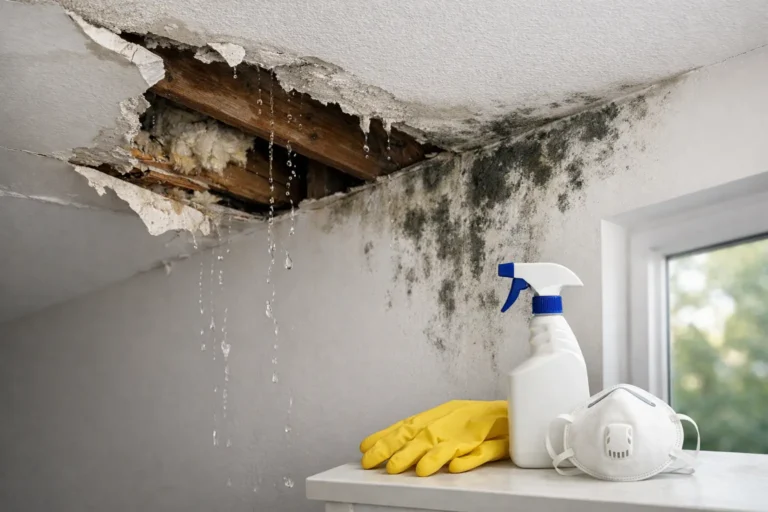
When soffits and fascias start to fail, the effects often spread. Water can track behind the guttering, leak into the wall head, soak rafter ends and stain the brickwork below. What should have been a straightforward external job can then turn into a repair project involving roofing, timber work and internal drying out.
Signs you may need soffit and fascia replacement
Some roofs make the problem obvious. Others do not. A board can look passable from the front while the back edge is soft, split or rotted where water has been sitting for years.
Common warning signs include flaking paint, visible cracks, sagging sections, loose gutter brackets and black staining around the roofline. You might also notice birds or insects getting into the eaves, damp smells in the loft or bits of timber and old paint collecting below the guttering after bad weather.
If the gutters overflow even after they have been cleaned, the issue may not be the guttering itself. Failing fascias can lose their shape or pull away from the rafter ends, which affects the fall and support of the gutter run. That is why a proper inspection matters. Treating the symptom without dealing with the cause usually wastes time and money.
When repair is enough and when replacement makes more sense
Not every roofline needs a full replacement. If the damage is localised and the underlying timbers are still sound, a repair may be the sensible option. That can include replacing a short section, refixing loose gutter supports or improving ventilation where the existing boards are still in fair condition.
There are times, though, when patching is false economy. If multiple areas are rotten, if old timber has already been covered over with thin plastic capping, or if the gutters are no longer secure, replacement is usually the better long-term job. The same applies where water has already reached the rafter feet or where the appearance of the whole frontage has deteriorated.
This is where experience matters. A contractor should be able to tell you clearly whether the existing roofline can be saved or whether it is better to strip it back and start properly. You want an honest assessment, not a quick cosmetic fix that hides the problem for six months.
What happens during soffit and fascia replacement
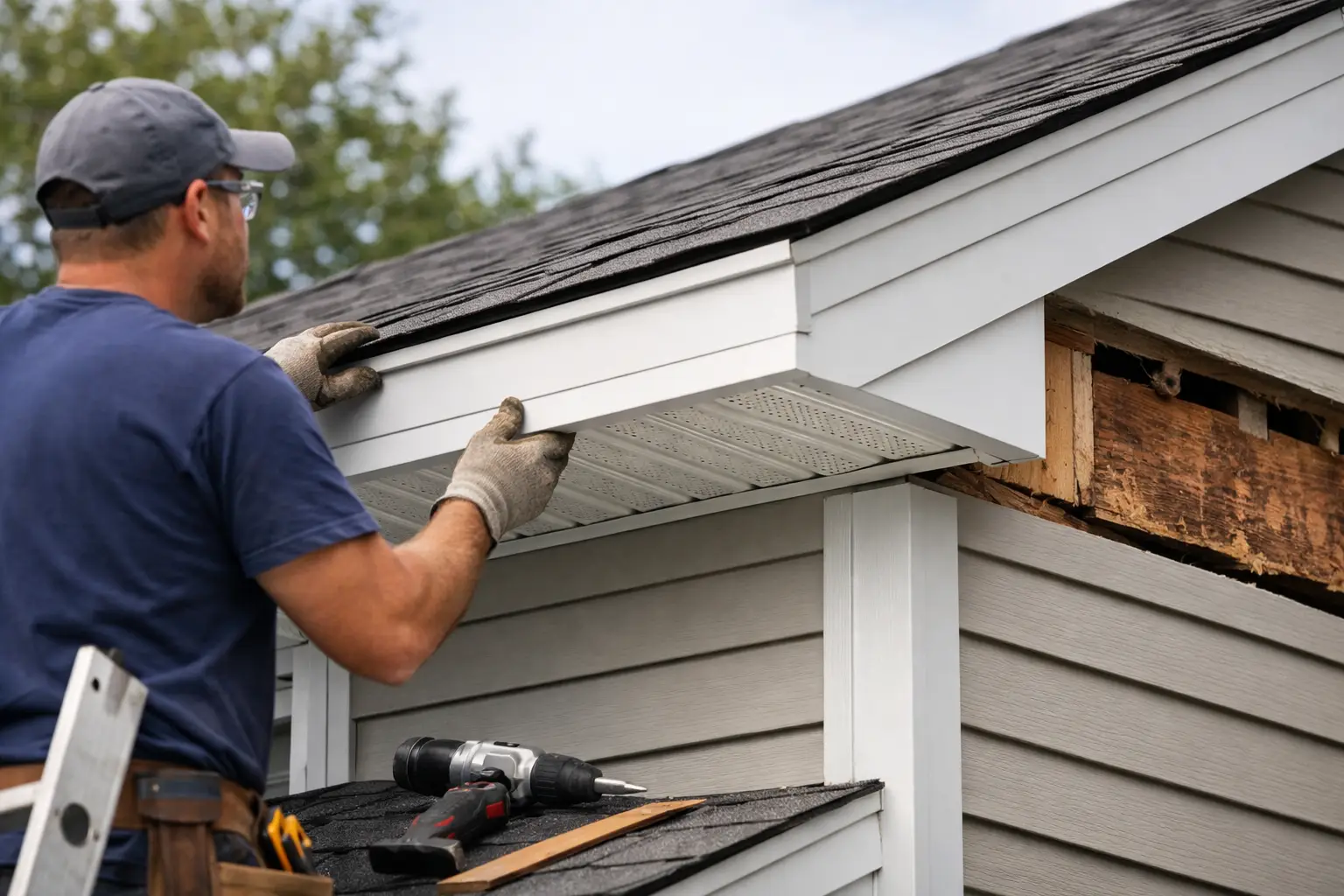
A proper soffit and fascia replacement job starts with safe access and a close inspection of the roof edge. The old guttering is removed first, followed by the existing fascia and soffit boards. If there is old timber underneath, that should be checked carefully for rot, insect activity and water damage.
Any failed rafter ends or supporting timbers need to be repaired before new boards go on. There is no point fitting new materials over damaged structure. Once the base is sound, the new fascia boards are fixed in place, the soffits are fitted neatly underneath, and the roof edge is trimmed so everything is weather-tight and properly aligned.
Ventilation should also be dealt with at this stage. On many older properties, poor airflow is part of the reason timber boards fail. A good installation does not just improve the look of the roofline. It helps the whole roof perform better.
After that, the guttering is refitted or replaced, falls are checked, joints are sealed where needed and the site is cleared. Done properly, the finish should look clean and straight, and the guttering should be solid with no movement.
Choosing materials: timber or UPVC
For most homeowners and landlords, UPVC is the practical choice. It is low maintenance, does not need regular painting and stands up well to wet weather. White remains the most common option, but black, brown and wood-effect finishes are also widely used depending on the style of the property.
Timber can still be the right option on some buildings, especially period homes where appearance matters and original details need to be respected. The trade-off is maintenance. Timber needs ongoing care and can become vulnerable if painting slips or moisture gets into the grain.
There is also a big difference between full replacement boards and thin cap-over products. Capping can look cheaper at the start, but if it is fixed over tired timber it does not remove the underlying risk. Full replacement usually gives a stronger, longer-lasting result.
Why roofline problems should not be left
The longer damaged soffits and fascias are left, the more likely it is that the problem spreads beyond the visible boards. Water does not stay neatly in one place. It follows fixings, gets into mortar joints and seeps into hidden timber.
That can affect the guttering, the felt at the eaves, the rafter ends and even the top of the cavity wall. In some cases, the first thing an owner notices is not the roofline at all. It is internal damp, mould in the loft or staining on an upstairs ceiling after heavy rain.
Replacing the roofline at the right time is often about preventing larger costs. It also helps avoid recurring maintenance headaches, especially on rental properties or buildings where access is awkward and repeated small repairs become disruptive.
What affects the cost of soffit and fascia replacement
The size of the property is the obvious factor, but it is not the only one. A simple front-and-back run on a standard house is very different from a property with multiple gables, awkward access or a conservatory below the eaves.
Condition matters too. If the old boards come away cleanly and the roof timbers are sound, the work is more straightforward. If there is hidden rot, failing felt, damaged brickwork or guttering that also needs replacing, the cost will rise because the scope has changed.
Material choice, scaffolding requirements and waste removal also play a part. This is why quotes can vary. The cheapest number is not always the best value if key parts of the job have been missed out. A proper quote should explain what is being removed, what is being replaced, how waste will be handled and whether any timber repairs are included if needed.
What to look for in a contractor
This is one of those jobs where workmanship matters. Poorly fixed fascia boards or badly aligned guttering will not take long to show up in the next spell of heavy rain.
Look for a contractor who is insured, experienced and clear about the process from start to finish. You should be told whether the existing boards are being capped or fully replaced, whether ventilation is being improved and what happens if rotten timbers are found once the old materials come off.
It also helps to choose a team that can deal with related external works if needed. Roofline issues do not always stay neatly within one trade. Sometimes the job uncovers minor roof repairs, masonry pointing or waste clearance that need sorting at the same time. A practical contractor will handle that properly and leave the site clean when the work is done.
For property owners in Ashford and nearby parts of Surrey and Middlesex, that kind of joined-up service can save a lot of hassle.
A roofline job that protects more than appearances
Most people first think about soffits and fascias when the front of the house starts looking tired. Fair enough. But their real value is in what they stop from happening. When the roof edge is secure, ventilated and properly weatherproofed, it protects the structure behind it and gives the guttering a solid base to do its job.
If you have started to notice signs of wear, it is worth getting it checked before a small roofline issue turns into a larger repair. A straightforward, properly done job now is usually far easier than chasing damp, rot and repeat call-outs later.