What Causes Roof Tiles to Slip?

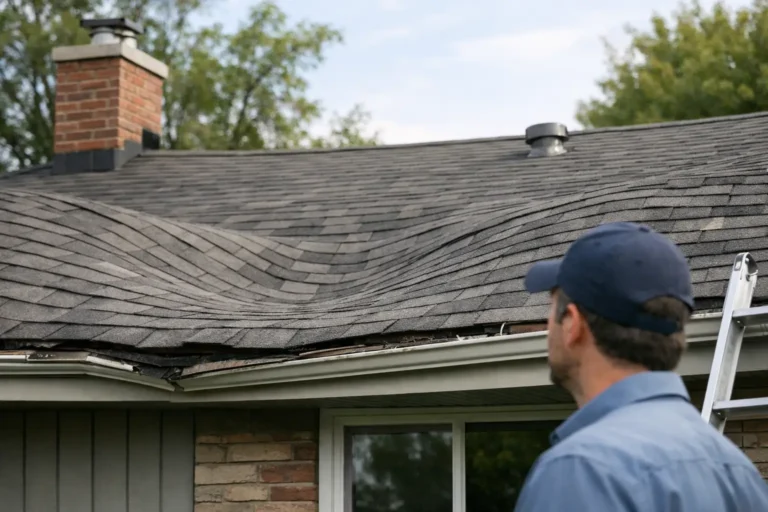
A roof tile rarely slips without a reason. If you have spotted a tile out of line, one sitting lower than the rest, or pieces of tile in the gutter or on the ground, the question is usually the same – what causes roof tiles to slip, and is it urgent?
In most cases, slipped roof tiles are a sign that something underneath has failed, shifted or worn out over time. Sometimes it is age. Sometimes it is storm damage. Sometimes the original fixing was not up to standard. Whatever the cause, it is best dealt with early. One loose tile can quickly turn into a leak, broken neighbouring tiles, or water getting into the underfelt and battens.
What causes roof tiles to slip most often?
The most common cause is failure of the fixing that holds the tile in place. On many pitched roofs, tiles are secured with nails, clips or a combination of both. As roofs get older, these fixings can corrode, loosen or snap. Once that happens, the tile no longer has proper support and can begin to move down the slope.
Another frequent cause is battens deteriorating. Battens are the horizontal timber lengths fixed across the rafters that the tiles sit on. If those timbers become rotten from long-term moisture or poor ventilation, they can no longer hold nails firmly. A tile may appear to have slipped on its own, but the real problem is often the timber behind it.
Weather also plays a part. High winds can lift and rattle tiles, especially at the edges, ridges and verges where exposure is greatest. Frost can make brittle or cracked tiles worse, and repeated expansion and contraction through changing temperatures puts extra strain on older roofs.
Nail sickness and why it matters
If your roof is older, one issue worth knowing about is nail sickness. This is a trade term for nail corrosion, usually seen on ageing pitched roofs where the original metal fixings have rusted over many years. As the nails weaken, they stop gripping the battens properly and tiles start slipping.
This is not always a one-tile problem. If nail sickness is affecting one area, there is a fair chance other sections of the roof are in the same condition. That is why a proper inspection matters. Simply pushing a tile back into place might make it look better for now, but it does not deal with the underlying fixing failure.
In some cases, a local repair is enough. In others, especially on older properties, a wider re-fix or partial reroof may make more sense long term. It depends on the age of the roof, the condition of the battens and felt, and how widespread the movement is.
Broken tiles, cracked tiles and impact damage
Not every slipped tile is caused by failed fixings alone. Tiles can crack through age, foot traffic, storm debris or impact from fallen branches. Once a tile is damaged, it may no longer sit correctly on the course below. It can shift out of place, slide, or leave a gap where wind-driven rain can get in.
Concrete and clay tiles age differently, but both can become more vulnerable over time. Older tiles may lose strength, especially if they have seen years of frost, moss growth and weather exposure. If someone has walked on the roof without proper care, that can also crack tiles without the damage being obvious from ground level.
This is why slipped tiles should never be looked at in isolation. The visible tile may be the one that has moved, but the neighbouring tiles often need checking as well.
Does poor installation cause roof tiles to slip?
Yes, it can. If tiles were not fixed correctly when the roof was installed or repaired, they are far more likely to move later. That might mean the wrong nails were used, not enough fixings were fitted, the batten gauge was set incorrectly, or the roof was patched rather than repaired properly.
Poor workmanship tends to show up faster in exposed areas. Valleys, hips, ridges, verges and lower eaves often reveal installation faults first because they take more weather. A badly repaired section can hold for a while, then fail during the next period of strong wind or heavy rain.
This is one reason many property owners call after a storm, assuming the weather caused all the damage. Sometimes the storm only exposed a weakness that was already there.
Can roof age alone make tiles slip?
Yes, but age usually works together with other factors. An older roof has had more time for nails to corrode, battens to weaken, felt to perish and tiles to become brittle. Even if the roof has performed well for years, that does not mean it will keep doing so without maintenance.
A roof does not fail all at once. More often, it starts with a few slipped tiles, a small leak near a chimney breast, damp patches in the loft, or debris collecting in the gutter. Those early signs matter because they give you a chance to sort the problem before timber decay and internal damage follow.
For landlords and homeowners alike, this is where regular visual checks help. You do not need to climb onto the roof. Just keep an eye out after bad weather and look for anything out of line.
Warning signs that slipped tiles are becoming a bigger problem
A slipped tile is visible, but the more serious issue is what it allows water and wind to do next. If rain gets beneath the covering, underlay can tear, battens can hold moisture, and loft insulation can become damp. Over time that can affect ceilings, plaster and timber structure.
Common warning signs include water staining on upstairs ceilings, damp smells in the loft, daylight showing through where it should not, and fragments of tile or mortar on patios or in gutters. You might also notice that one section of the roof looks uneven from the street.
Not every loose tile causes an immediate leak. That depends on the pitch of the roof, the exposure of the property, and exactly where the tile has moved from. Even so, it is not something to leave. A tile that survives one week may not survive the next spell of wind.
What causes roof tiles to slip after a storm?
After a storm, slipped tiles are usually the result of wind pressure exploiting an existing weakness. Strong gusts can catch the lower edge of a tile and lift it slightly. If the nail, clip or batten is already compromised, that movement can be enough to dislodge it.
Heavy rain can make matters worse by soaking vulnerable areas and exposing rotten battens or failing underlay. If branches or debris have landed on the roof, impact damage may also be part of the problem.
Storm damage is not always dramatic. Sometimes there is no obvious hole in the roof, just one or two tiles that have moved enough to let water in. Fast attention matters because one slipped tile can affect the ones around it.
Repair or replace?
That depends on the cause. If a small number of tiles have slipped because of localised damage, a straightforward repair is often all that is needed. The loose tiles can be removed, the battens and underlay checked, and the section re-fixed properly.
If the roof is suffering from widespread nail sickness, decayed battens or repeated slipping across multiple elevations, patching one area at a time may not be the most cost-effective route. You can spend good money chasing one failure after another. In that situation, a more extensive repair or partial replacement may be the better decision.
A proper assessment should look at the roof as a system, not just the visible symptom. That means checking the condition of the tile, the fixing, the batten, the underlay and the surrounding area.
Why acting early saves money
The main cost with slipped tiles is rarely the tile itself. It is the water ingress and secondary damage that follow if the issue is ignored. Once moisture gets into timber, insulation and ceilings, the repair can spread well beyond the roof covering.
Acting early keeps the job smaller, safer and easier to control. It also reduces the chance of a loose tile coming down onto a drive, garden, pavement or parked car. For occupied homes and small commercial properties, that peace of mind matters.
For local owners across Surrey and Middlesex, the sensible approach is simple: if you can see a slipped tile, or suspect one after bad weather, get it checked before the next storm tests it again. A sound roof should stay where it is put, and when tiles start moving, there is always a reason worth finding.