What Is a Roofing Emergency?
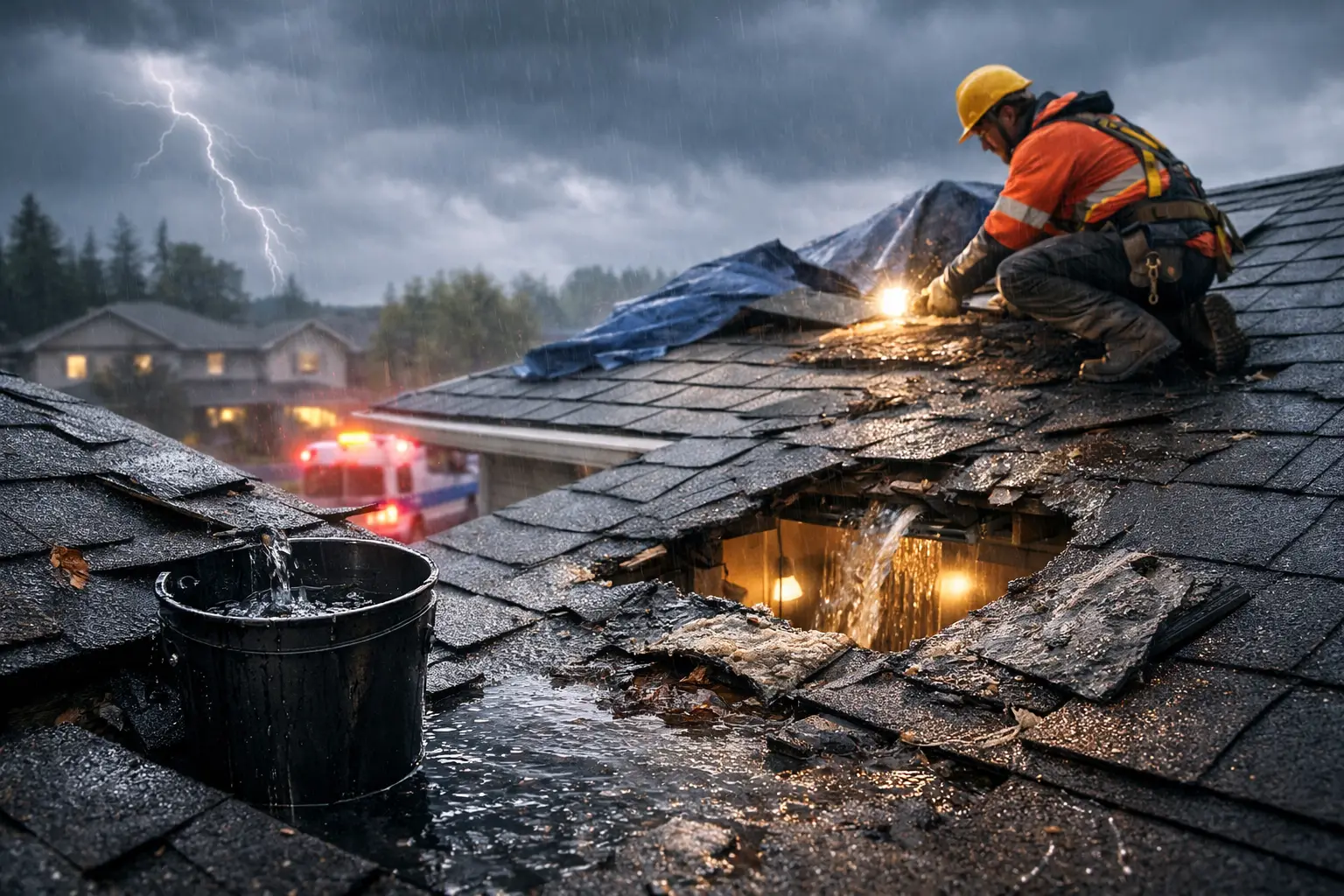
A small drip in the loft at 9pm can turn into a stained ceiling, damaged electrics and soaked insulation by morning. That is why homeowners often ask, what is a roofing emergency, and the honest answer is simple – it is any roof problem that poses an immediate risk to people, property or the security of the building.
Some roofing issues are frustrating but can wait a day or two for a booked repair. Others need urgent attention because water is actively entering the property, roofing materials have become dangerous, or the structure has been exposed after a storm, impact or sudden failure. Knowing the difference helps you act quickly without panicking or paying for unnecessary emergency callouts.
What is a roofing emergency in practical terms?
In practical terms, a roofing emergency is not just any roof defect. It is a fault serious enough that delaying repairs is likely to make the damage worse, create a safety hazard, or leave the property vulnerable to further weather exposure.
A slipped tile on a dry day may not be an emergency if there is no leak and the surrounding area is stable. A section of tiles blown off during high winds, with rain entering the loft, is a different matter. The same applies to a flat roof. A small area of ageing felt may be routine maintenance, while a split membrane letting water pour into a bedroom is urgent.
The key question is not whether the roof needs repair. It is whether it needs attention now.
The signs your roof problem needs urgent action
The clearest sign is active water ingress. If water is coming through the ceiling, running down walls, dripping near light fittings or pooling in the loft, you are beyond routine maintenance. Water travels quickly and often appears far from the original entry point, which means the visible leak may be only part of the problem.
Storm damage is another common trigger for emergency work. High winds can lift tiles, ridge sections, flashing and flat roofing materials. Heavy rain can then force water into exposed areas. Even if the internal leak has not started yet, visible openings in the roof covering should be treated seriously.
A roofing emergency can also involve falling materials. Loose tiles, slates, chimney pots, flashing or guttering can injure people below and damage cars, conservatories or neighbouring property. If part of the roof is unstable and at risk of coming down, it needs making safe as soon as possible.
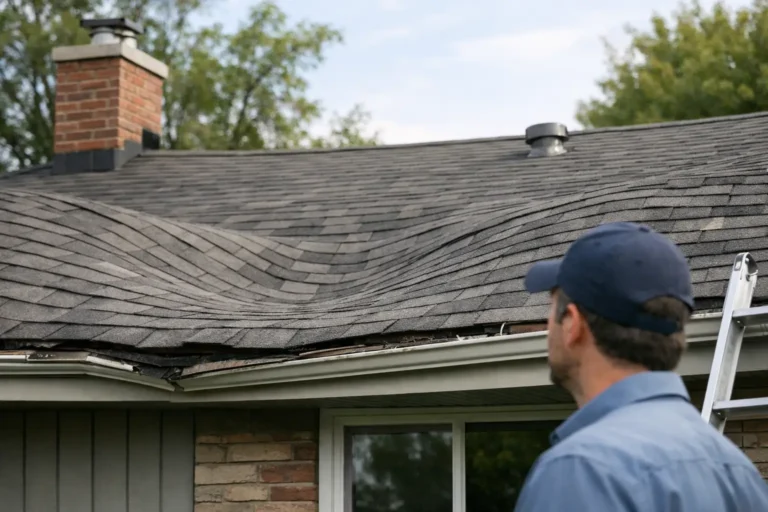
Then there are structural concerns. A sagging roofline, sudden movement, waterlogged timbers, or signs that part of the roof deck has weakened should never be left to chance. The same goes for fire damage, impact damage from a tree branch, or severe damage after repeated leaks.
Problems that are usually classed as roofing emergencies
There is always some judgement involved, but most contractors would treat the following as genuine emergencies.
A major leak during rainfall is one. If water is entering the property fast enough to damage ceilings, flooring, plaster, furniture or electrics, urgent attendance is sensible. Temporary protection can limit wider costs.
Storm-stripped roof coverings are another. Missing tiles, torn felt on a flat roof, detached ridge tiles or failed leadwork can all expose the structure immediately.
Collapsed or partially collapsed sections also fall into this category. If a roof has dipped badly or given way, the risk is no longer cosmetic. It becomes a matter of safety.
Dangerous debris is often overlooked. Sometimes the emergency is outside rather than inside. A tile hanging over a pavement or a loose piece of flashing flapping in the wind can be just as urgent as a leak.
Finally, any roof issue affecting vulnerable areas of the property can become an emergency faster. Water entering around electrical installations, loft conversions, commercial stock areas or top-floor bedrooms tends to need a faster response because the consequences rise quickly.
Problems that often feel urgent but can sometimes wait
Not every roofing issue needs a 24-hour callout. That matters, because a good contractor should be honest about what is urgent and what can be booked in properly.
A single slipped tile in settled weather may be repairable within normal working hours. Moss growth, minor staining from an old leak, worn pointing on a ridge that is still intact, or a small damp patch that is no longer active are usually signs that repairs are needed, but not necessarily that the situation is critical that same day.
Blocked gutters can also be misleading. If they are causing overflow near walls, they should be dealt with soon, but they are not always a roofing emergency unless water is entering the building or causing immediate hazard. The same goes for old flat roofing that looks tired but is still weathering adequately.
This is where experience matters. A trade professional can usually tell quite quickly whether a defect needs a temporary emergency repair, a full repair, or simply monitoring until a planned visit.
What to do first if you think you have a roofing emergency
Start inside the property. Move furniture, electrical items and anything valuable away from the leak. Use buckets or containers to catch water, and place towels down to reduce slipping. If water is coming through near electrics, do not take risks. Isolate the affected area if it is safe to do so, and get professional help.
If you can see water bulging under a ceiling, be careful. A ceiling can hold more weight than people expect, until it cannot. In some cases, controlled release of the water may reduce the chance of a larger collapse, but if you are unsure, leave it alone and keep the area clear.
Outside, do not climb onto the roof yourself during bad weather or at night. That is where many people make a bad situation worse. Wet tiles, unstable edges and hidden damage are dangerous even in daylight. A quick look from ground level is enough to note obvious missing materials or debris.
Then call a roofing contractor that offers emergency response. The aim of an emergency visit is often to make the roof safe and watertight first, then return for any more extensive repair once conditions allow.
What an emergency roofer will usually do
Emergency roofing is not always a full permanent repair on the first visit. It depends on weather, access, the extent of damage and whether materials are available. In many cases, the priority is to stop further harm.
That might mean securing loose tiles, applying a temporary waterproof covering, sealing an exposed section, making debris safe, or carrying out a targeted repair where the defect is clear and accessible. If water has been entering for some time, a proper follow-up inspection may also be needed to assess timbers, insulation and internal damage.
This is one reason to use an insured, experienced contractor rather than chasing the cheapest emergency callout. The right job is not just to patch what is visible. It is to stabilise the situation and identify whether there is a wider issue behind it.
It depends on the building and the weather
One thing homeowners often miss is that the same defect can be urgent in one situation and less urgent in another. A small hole in a roof during a dry spell may survive for a short time with minimal harm. The same hole before a weekend of heavy rain is another matter.
Property type matters too. A leak over a rarely used outbuilding is not ideal, but it is not the same level of risk as a leak over a family bedroom, stairwell or business premises. Flat roofs can also behave differently from pitched roofs. Water tends to spread and sit, which can make failures escalate quickly if the covering has split.
If your property has previous patch repairs, ageing materials or known weak spots, it makes sense to act sooner rather than later. Roofs rarely improve by being left alone.
Why fast action usually saves money
Many people hesitate because they are worried about cost. That is understandable. But with roofing, delay often makes the final bill larger. Water damage spreads into plaster, decoration, insulation, timber and electrics. A repair that starts as a few displaced tiles can turn into internal redecoration, ceiling repairs and replacement materials if rain keeps getting in.
There is also the risk of hidden damp. Once moisture gets into the roof structure or loft insulation, the problem can linger after the obvious leak appears to stop. Acting early reduces the chance of mould, timber decay and repeat callouts.
For local homeowners and landlords, the most sensible approach is straightforward. If there is active leaking, visible storm damage, unstable materials or any safety concern, treat it as urgent and get it checked. If the issue looks minor and the roof is stable, book an inspection before it worsens.
AJW Specialists Property Maintenance deals with the kind of urgent roof problems that need a fast, practical response, especially when making the property safe cannot wait. The main thing is not to guess from indoors while the damage spreads above your head.
If you are ever unsure what is a roofing emergency, trust the basic rule: if the roof is letting water in, putting people at risk or leaving the building exposed, it is worth calling sooner rather than later. A quick professional assessment can be the difference between a contained repair and a much bigger job next week.