Skip Hire Versus Rubbish Clearance
You have a pile of waste to shift, the driveway is already tight for space, and you need it gone without turning the job into a week of hassle. That is usually when the question comes up – skip hire versus rubbish clearance. Both can work well, but they suit different jobs, different properties and different timeframes.
If you choose the right option, the job feels straightforward. Choose the wrong one, and you can end up paying for wasted skip space, waiting around for permits, or doing more lifting than you expected. For homeowners, landlords and small businesses, the best choice often comes down to access, waste type, labour and how quickly the site needs to be cleared.
Skip hire versus rubbish clearance – what is the difference?
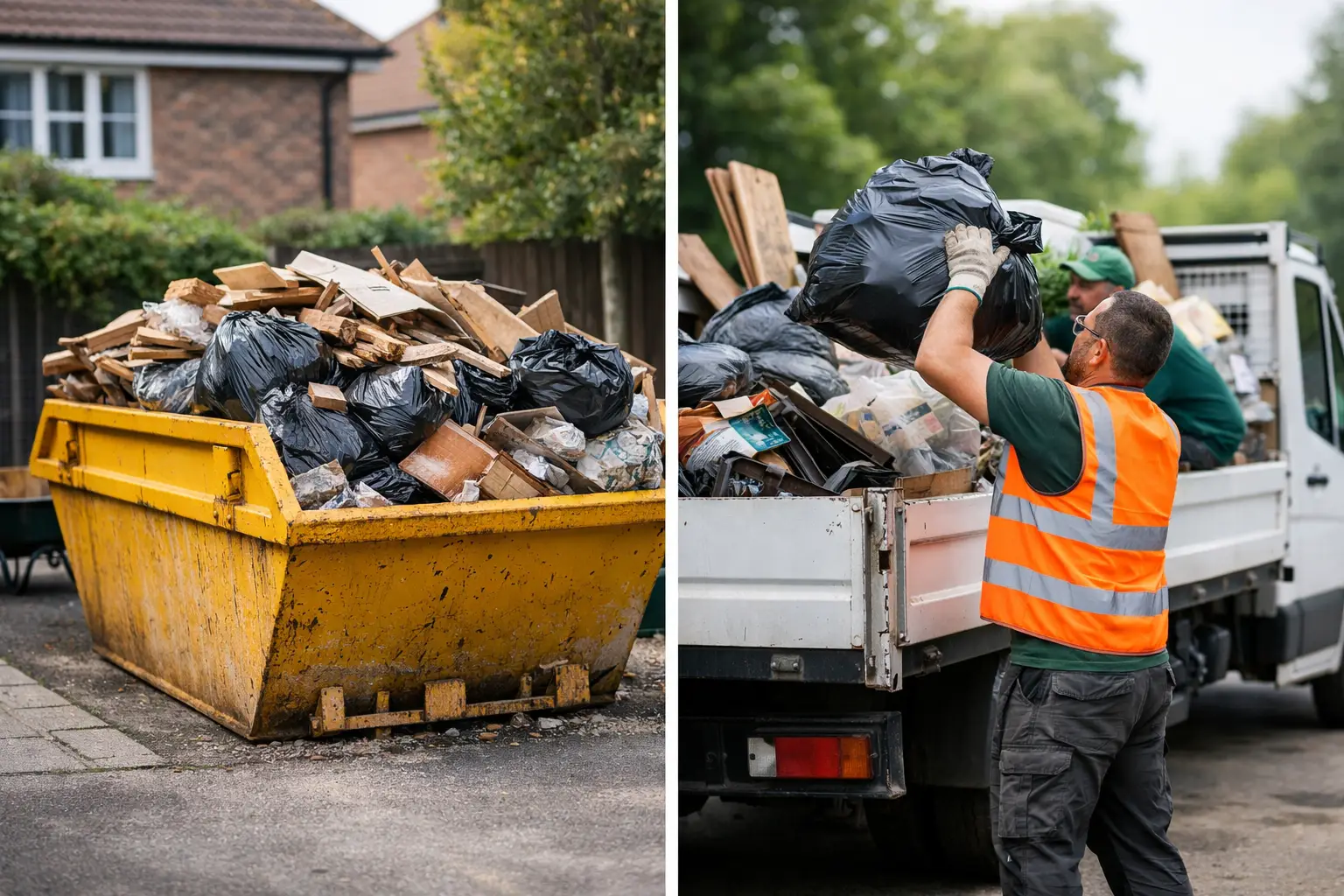
Skip hire is exactly what it sounds like. A skip is delivered to your property, left on site for an agreed period, and then collected when you have filled it. It is a good option when you want time to load waste at your own pace, especially during renovations, garden projects or longer clear-outs.
Rubbish clearance is a hands-on collection service. A team comes to site, loads the waste for you, sorts it properly and takes it away the same day in most cases. It is often the better fit when waste needs removing quickly, when you do not want the physical work, or when access and parking make a skip awkward.
On paper, that sounds simple. In practice, there are trade-offs.
When skip hire makes more sense
Skip hire usually suits jobs where waste is being created over several days rather than all at once. If you are stripping out a kitchen, replacing fencing bit by bit, clearing a garden in stages or doing general building work, having a skip on site gives you somewhere to put debris as you go.
It can also be more cost-effective for heavy volumes of inert waste such as soil, hardcore, bricks and rubble, depending on the amount. If you have a large project with a steady flow of waste, a skip gives structure to the job. Everything goes in one place, and collection is arranged once it is full.
That said, there are practical issues people often overlook. A skip takes up room, which can be a problem on smaller driveways or narrow roads. If it cannot go on private land, you may need a permit for the public highway. That adds time, extra cost and sometimes restrictions on where it can sit.
Then there is the loading itself. With skip hire, you are doing the lifting unless you have your own labour on site. For some customers, that is fine. For others, especially where the waste is bulky, messy or upstairs, it quickly becomes the main reason to choose a clearance service instead.
Best jobs for skip hire
Skip hire is often the better choice for planned refurbishment work, ongoing landscaping, masonry waste and projects where trades are generating waste across several days. It gives flexibility and keeps a site tidy while work is still going on.
If you have the access, the time and the manpower, it can be a solid option.
When rubbish clearance is the better option
Rubbish clearance is usually the practical answer when speed matters. If you want waste gone today rather than sitting outside for a week, a clearance team can load and remove it quickly. That is especially useful after storm damage, emergency roof repairs, tenant move-outs, fly-tipping incidents or end-of-project clean-ups.
It is also well suited to mixed waste. A lot of jobs do not produce neat piles of one material. Instead, you get broken timber, old fencing, plasterboard, bagged rubbish, green waste, furniture, shed contents and general junk all mixed together. In those cases, having a team handle the loading and sorting can save a lot of time.
For properties with limited access, rubbish clearance often wins outright. If there is no room for a skip, if parking is difficult, or if the waste is in a rear garden, loft, garage or side alley, a collection service is usually easier to manage. The labour is part of the service, which matters more than many people expect.
Best jobs for rubbish clearance
Rubbish clearance is ideal for one-off collections, urgent waste removal, bulky items, awkward access and jobs where you want somebody else to do the lifting. It also suits customers who want a cleaner, quicker finish without having a skip sat outside the property.
For many domestic jobs, that convenience is the deciding factor.
Cost depends on more than the headline price
A lot of people compare skip hire and rubbish clearance on price alone, but the cheapest quote is not always the cheapest job overall.
With skip hire, the basic cost may look lower at first, especially if you plan to fill it fully. But you need to factor in permit charges if the skip goes on the road, the length of hire, any limits on weight or waste type, and the time or labour needed to load it. If the skip is too small and you need a second one, the maths changes fast.
With rubbish clearance, pricing is usually based on the volume, type of waste, ease of access and labour involved. The quote may appear higher than a bare skip hire figure, but that often includes loading, collection and immediate removal. For customers without spare time or manpower, that can work out better value.
This is one of those jobs where a proper quote matters. A good contractor will ask what waste you have, where it is located, how quickly it needs to go and whether there are access restrictions. That is how you get a realistic answer rather than a guess.
Permits, responsibility and legal disposal
This is where people can get caught out. If you hire a skip and it needs to sit on the road, a permit may be required. There can also be rules around lighting, positioning and how long it can stay there. If that is not arranged properly, it can create delays and extra cost.
With rubbish clearance, the bigger issue is making sure the waste is handled legally. If someone offers a suspiciously cheap collection and then dumps it, the problem can come back to you. That is why using a licensed waste carrier matters. It protects you from fly-tipping risks and gives you confidence that the material is being taken to the proper facility.
For property owners and landlords, that peace of mind is worth having. You want the site cleared, but you also want the job done properly.
Access often decides the job
In theory, both options remove waste. In reality, the layout of your property often makes the decision for you.
If you have a wide driveway, easy loading and room to leave a skip without blocking anything, skip hire can work well. If your property is on a tight road, has limited parking, shared access or a small frontage, a skip may be more trouble than it is worth.
The same applies to where the waste sits. Waste in a front garden is one thing. Waste behind a garage, in a shed, on a flat roof after repair work or stacked in a side return is another. The harder the carry distance, the more useful a rubbish clearance team becomes.
That is why local experience helps. A contractor who deals with properties across built-up parts of Surrey and Middlesex will usually spot the access issue before it becomes your problem.
Which option suits different types of waste?
Builders’ rubble, soil and hardcore often suit skips, particularly on larger projects. General household junk, old furniture, bagged rubbish, garden waste and mixed site debris often suit rubbish clearance better. Plasterboard, electrical items, fridges, mattresses and hazardous materials can have extra rules either way, so it is always worth checking in advance.
This is another reason not to assume one option fits every job. A roofing repair, garden overhaul and garage clear-out may all create waste, but they do not all need the same solution.
The practical way to choose
If you are happy to load waste yourself, have space on site and expect to generate debris over several days, skip hire is often the right call. If you need the waste gone fast, want labour included, or have limited access and mixed rubbish, clearance is usually the easier and more efficient option.
Some jobs also benefit from a contractor who understands both the building work and the waste side of the job. That is often the case after roofing, fencing or landscaping work, where clearing the site properly is part of finishing the job well. AJW Specialists Property Maintenance handles that kind of work with the same practical approach – turn up, clear it properly and leave the area tidy.
The right choice is not about which service sounds bigger or cheaper. It is about what fits your property, your waste and your timeframe. If you are unsure, get a proper quote based on the actual job, because a five-minute conversation now can save a lot of wasted time later.