Moss Removal From a Roof Without Tile Damage
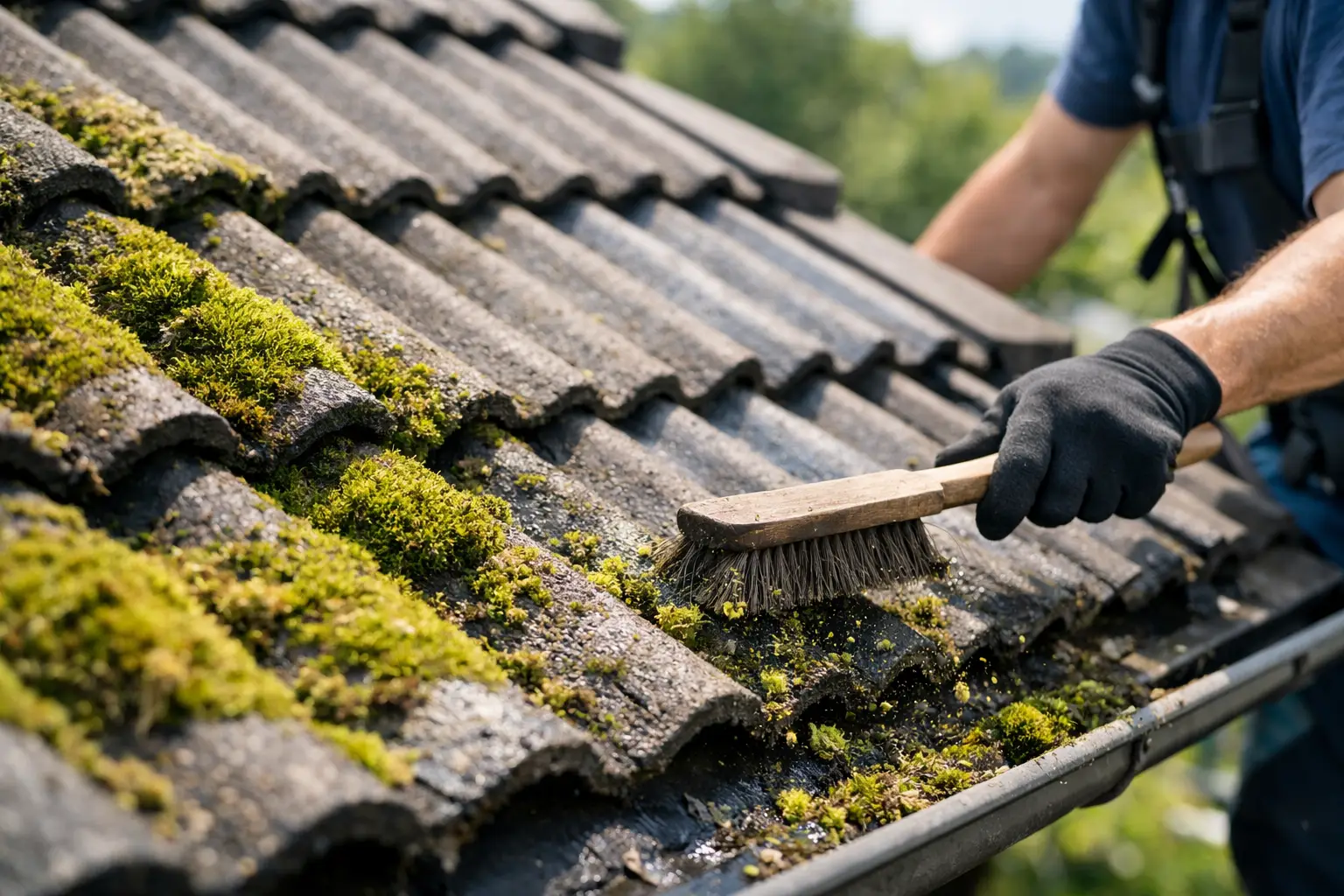
A green roof may look harmless from the ground, but moss removal from roof surfaces is about more than improving kerb appeal. Moss holds moisture against tiles, drops into gutters and can expose small faults that become leaks during heavy rain. Left for long enough, it can turn a straightforward maintenance job into a repair bill.
For homeowners, landlords and small business owners, the sensible approach is to deal with growth before it blocks drainage or affects the roof covering. The right method depends on the roof’s age, tile condition, pitch and access. There is no one-size-fits-all clean, and a rushed job can do more harm than the moss itself.
Why moss grows on roofs
Moss thrives where a roof stays damp. North-facing slopes, overhanging trees, shaded gardens and properties close to established greenery are common problem areas. Concrete tiles, clay tiles and slate can all develop growth, particularly where rainwater does not dry quickly after a shower.
The moss does not usually force its way through a sound tile. The trouble starts when it holds water around laps and edges, grows into small gaps, or breaks away in wet clumps. Those clumps collect in gutters, downpipes and roof valleys. Once rainwater cannot drain freely, it may overflow onto fascias, walls and paths, or back up beneath the roof covering.
Moss can also hide cracked tiles, worn pointing around ridges, loose flashings and damaged valley sections. Cleaning is therefore a useful opportunity to inspect the roof properly rather than simply making it look tidier.
Signs your roof needs attention
A light dusting of green growth is not always an emergency, especially on an older roof that is otherwise dry and secure. However, action should not be put off if moss is visibly lifting at tile edges, gathering in thick cushions, or falling onto the ground after wind and rain.
Gutters that overflow despite being recently cleared are another warning sign. Moss may be sitting higher up the roof and washing down every time it rains. Look out for plant growth in gutters, staining on exterior walls, damp patches near the top of internal walls, or debris collecting around drain outlets.
If you have noticed a leak, missing tile or slipped slate, do not treat roof cleaning as the first job. The roof should be made safe and repaired before any moss is removed. Walking on damaged coverings or applying water to an open fault can make the issue worse.
Moss removal from roof: the safe method
A proper job starts from the ground. The roof should be assessed for access, fragile areas, loose tiles, overhead cables, nearby conservatories and the condition of gutters and downpipes. On steep, high or awkward roofs, safe access equipment is not optional. It protects both the person carrying out the work and the roof itself.
The moss is normally removed by hand using suitable tools and controlled working methods, rather than aggressive scraping. This allows debris to be collected as it is loosened, reducing the amount that enters gutters and drains. Tiles should be handled with care, especially older clay tiles and slate, which can crack if pressure is applied in the wrong place.
Once the main growth has been cleared, gutters and valleys need to be cleaned through. This part matters. A roof can look clean from the pavement while a blocked valley or downpipe is still causing water to overflow where it should not.
A specialist treatment may then be applied where appropriate. It works gradually to deal with remaining spores and algae, helping to slow regrowth without the need for harsh cleaning. The product and application method should suit the roof material, and care must be taken around gardens, ponds and neighbouring property.
Finally, the roof should be checked for defects revealed during the clean. A cracked tile, failing verge, loose ridge tile or damaged flashing is far easier to deal with when found early.
Why pressure washing is often the wrong choice
Pressure washing can make a roof look clean quickly, which is why it is often tempting. On many tiled roofs, however, it is not the best option. High-pressure water can strip the protective surface from concrete tiles, drive water beneath overlaps and dislodge weak or ageing tiles. It can also force moss straight into gutters and downpipes.
The risk is higher on older roofs, roofs with signs of wear, and properties where the tile surface has already become porous. Even where pressure washing appears successful at first, the roof may become more vulnerable to future weathering and regrowth.
There are situations where carefully controlled low-pressure cleaning may be considered, but only after an inspection confirms the roof is suitable. It should never be treated as a quick weekend task with a domestic pressure washer. The cost of replacing damaged tiles or dealing with an avoidable leak soon outweighs the convenience.
Can you remove roof moss yourself?
For a low, accessible roof with minimal growth, some property owners choose to clear loose debris from gutters themselves. But working at height has obvious risks, and roof surfaces become extremely slippery when wet or moss-covered. Ladders alone do not provide a safe working platform for most roof cleaning work.
There is also a practical issue. A person trying to reach moss from a ladder may lean too far, scrape tiles too hard or miss blocked areas around valleys and chimney stacks. Without the right access and experience, it is difficult to know whether a tile has been damaged or whether an existing fault has been uncovered.
Calling in an experienced contractor is the safer option when moss is widespread, the roof is steep, access is restricted, or there are signs of a leak. It also means the waste is removed properly rather than left in garden beds, drains or at the bottom of a downpipe.
How often should a roof be cleaned?
Most roofs do not need annual moss removal. The right interval depends on shade, nearby trees, roof material and local weather exposure. A property beneath mature trees may need checking every year and cleaning every two to four years. A more open, sunny roof may need far less frequent work.
Regular gutter clearing makes a major difference between cleans. Keeping branches, leaves and moss fragments out of gutters allows rainwater to flow away as designed. Cutting back overhanging branches where practical can also improve drying and reduce the amount of organic debris landing on the roof.
It is worth arranging an inspection after storms, particularly if you have seen debris on the ground or water running over gutter edges. Small issues are usually quicker and less costly to put right before a wet winter exposes them.
What a professional roof clean should include
A quote should be based on the actual roof, not a guess from a generic price list. The contractor should explain how access will be managed, whether any repairs are needed first, how moss and debris will be collected, and what will happen to the waste. If a treatment is recommended, you should know what it is intended to do and what results to expect over time.
Site clean-up matters too. Moss can stain patios, block gullies and make paths slippery if it is not cleared properly. A professional service should leave gutters running freely, remove collected waste and keep the surrounding area tidy.
AJW Specialists Property Maintenance carries out roof maintenance and exterior works for properties across Ashford, Staines and the surrounding area. Where moss has revealed broken tiles, damaged pointing or a drainage problem, having one experienced team able to inspect, repair and clear up saves time and avoids chasing several trades.
A clean roof should never come at the expense of a sound roof. If the growth is building up, gutters are overflowing or tiles are starting to look tired, arrange a proper inspection and deal with the cause before the next spell of heavy rain does it for you.