How to Maintain a Flat Roof Properly

A flat roof rarely fails without warning. More often, it starts with standing water after rain, a small split at a joint, or moss and debris blocking an outlet. If you want to know how to maintain a flat roof properly, the aim is simple – spot small issues early, keep water moving, and deal with wear before it turns into a leak.
Flat roofs are practical, cost-effective and common on extensions, garages, porches and commercial units. But they do need regular attention. Unlike a pitched roof, where water runs off quickly, a flat roof depends on good falls, sound coverings and clear drainage. When one of those is off, problems build up fast.
Why flat roof maintenance matters
The biggest enemy of a flat roof is trapped moisture. If water sits on the surface for too long, it starts testing every seam, edge and weak point. Over time that can lead to blistering, cracks, lifted joints, rotten decking and internal damp.
That does not mean every puddle is a disaster. Some flat roofs hold a small amount of water for a short time after heavy rain and still perform well. The problem is persistent ponding, especially if it stays there for more than 48 hours or keeps returning in the same area. That usually points to poor drainage, sagging, or a surface that is starting to fail.
Regular maintenance also helps you avoid the usual expensive surprises. A blocked outlet is cheap to clear. Water damage to ceilings, insulation and timbers is not.
How to maintain a flat roof through the year
Most flat roofs benefit from a simple inspection at least twice a year, usually in spring and autumn, plus an extra check after storms or very heavy rainfall. You do not need to overcomplicate it. The goal is to look for changes.
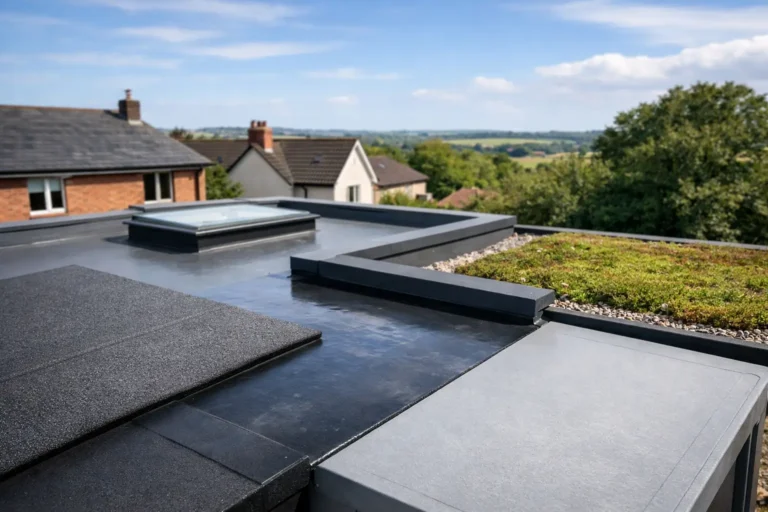
Start with the roof surface itself. Check for cracks, splits, bubbling, blisters, dips, exposed seams, loose flashing and signs of wear around edges. If the roof has felt, look closely at joints and any mineral finish that appears to be wearing thin. On GRP or fibreglass roofs, watch for cracks or edge separation. On EPDM rubber roofs, inspect for punctures, shrinkage or loose trims.
Then check drainage points. Leaves, moss, silt and general debris can easily collect around outlets and gutters, especially if the roof is near trees. Even a small blockage can slow water enough to create standing puddles.
Finally, look inside the property. Damp patches on ceilings, peeling paint, staining on walls and musty smells often show up before the leak becomes obvious. A roof problem is not always dramatic. Sometimes it is a slow entry point doing damage quietly over months.
Keep it clear and keep it draining
Cleaning is one of the simplest parts of flat roof maintenance, but it makes a real difference. Debris holds moisture, encourages moss growth and blocks water from draining properly. If a roof is left untouched, the surface can stay wet far longer than it should.
Use a soft brush or broom to clear leaves, twigs and loose dirt. Avoid anything too aggressive that could damage the roof covering. Drainage outlets and gutters should be cleared carefully so water can run freely. If you are dealing with built-up grime or algae, the right method depends on the roof material. Some surfaces can be damaged by harsh chemicals or pressure washing, so it is worth being cautious.
This is where people sometimes cause avoidable damage. Walking heavily across a flat roof, dragging tools over it or using the wrong cleaning method can create more problems than the original dirt. If the roof is older or already showing signs of wear, a professional inspection is often the safer option.
Watch the weak points first
Most leaks on flat roofs do not start in the middle of a wide, open section. They usually begin at details and junctions. That includes upstands, flashings, roof lights, vents, edges and any point where different materials meet.
These areas expand and contract with temperature changes, so they tend to work loose first. If sealant has cracked, lead flashing has lifted, or a trim has started to pull away, water will find that gap. A small repair done early can save a much larger patch repair or full replacement later.
If your flat roof is over a kitchen extension or another warm room, keep an eye on condensation as well. Not every moisture issue comes from the weather outside. Poor ventilation can cause internal moisture build-up, which can be mistaken for a roofing failure. The fix depends on the source, so proper diagnosis matters.
When a flat roof needs repair, not just maintenance
Maintenance helps extend the life of a flat roof, but it does not stop ageing. Every system has a lifespan, and materials eventually harden, crack or lose adhesion. If you are seeing repeated leaks, widespread bubbling, soft spots underfoot or large areas of ponding, routine maintenance may no longer be enough.
The key question is whether the issue is local or general. A single split or isolated flashing defect can often be repaired effectively. But if the roof covering is failing across multiple areas, patching one section after another becomes a false economy.
Age matters here. A fairly new flat roof with one weak detail is usually worth repairing. An older roof with several previous repairs may be better replaced, especially if the decking or insulation has been affected underneath. A proper assessment gives you a clear answer instead of guesswork.
Safety comes first
Flat roofs can look easy to access, but they still carry risks. Slippery surfaces, weak spots, fragile roof lights and unsafe edges all need to be taken seriously. If the roof is above a conservatory, extension or garage, access can be awkward and dangerous without the right equipment.
For homeowners and landlords, the sensible approach is to carry out visual checks where safe and leave anything beyond that to an experienced contractor. There is a big difference between spotting a blocked gutter from a ladder and trying to repair a roof surface without proper access or training.
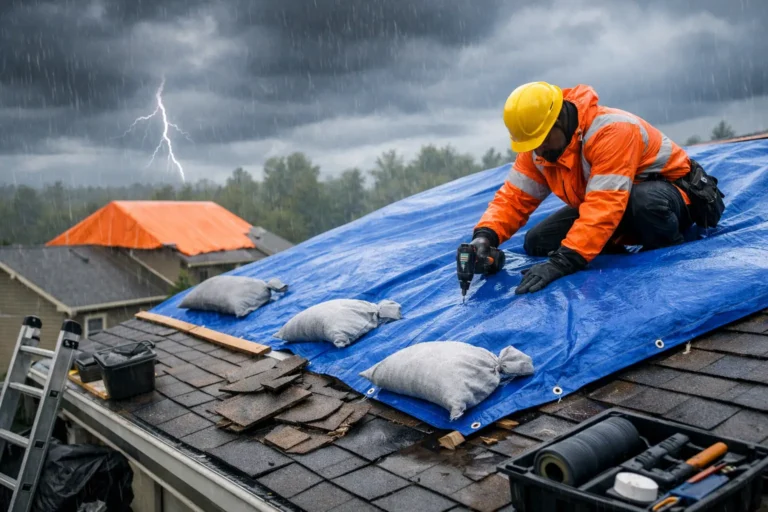
That is especially true after storm damage. If wind has lifted sections of covering or debris has struck the roof, quick action matters, but so does doing it safely. Temporary fixes have their place, but poor emergency repairs often fail when the next spell of rain arrives.
Seasonal changes and what to expect
British weather is hard on flat roofs. Winter brings freezing temperatures, heavy rain and blocked drainage from fallen leaves. Summer can cause expansion and UV wear, especially on older felt systems. Spring and autumn tend to reveal what the previous season has done.
That is why regular timing matters more than overchecking. A spring inspection helps catch winter damage. An autumn one helps clear leaves and prepare for wetter months. If you own a rental property or manage a small commercial premises, putting these checks in the diary can prevent a tenant complaint turning into an urgent repair call.
For properties in areas such as Ashford, Staines and the wider Surrey and Middlesex area, where a lot of homes have extensions, garages and outbuildings with flat roofs, this kind of routine upkeep is often far cheaper than waiting for obvious failure.
Knowing when to call a professional
If you notice standing water that does not clear, visible splits, persistent damp indoors, sagging, or repeated leaks in the same area, it is time to get it checked properly. The same applies if the roof has not been inspected in years or if you have recently bought the property and do not know its age or condition.
A good contractor will not just look at the surface and guess. They will assess the covering, edges, drainage, flashings and likely condition underneath, then tell you whether maintenance, repair or replacement makes the most sense. Straight answers matter, especially when you are trying to control costs.
At AJW Specialists Property Maintenance, the focus is always on practical roofing advice and doing the job properly. If a roof only needs a repair, that should be clear. If it is beyond that point, you should know before more money is spent on short-term fixes.
A flat roof will last far better with basic care than with neglect. Keep it clear, check it regularly, act on early signs of wear, and do not leave drainage or small defects until the next downpour forces the issue.